
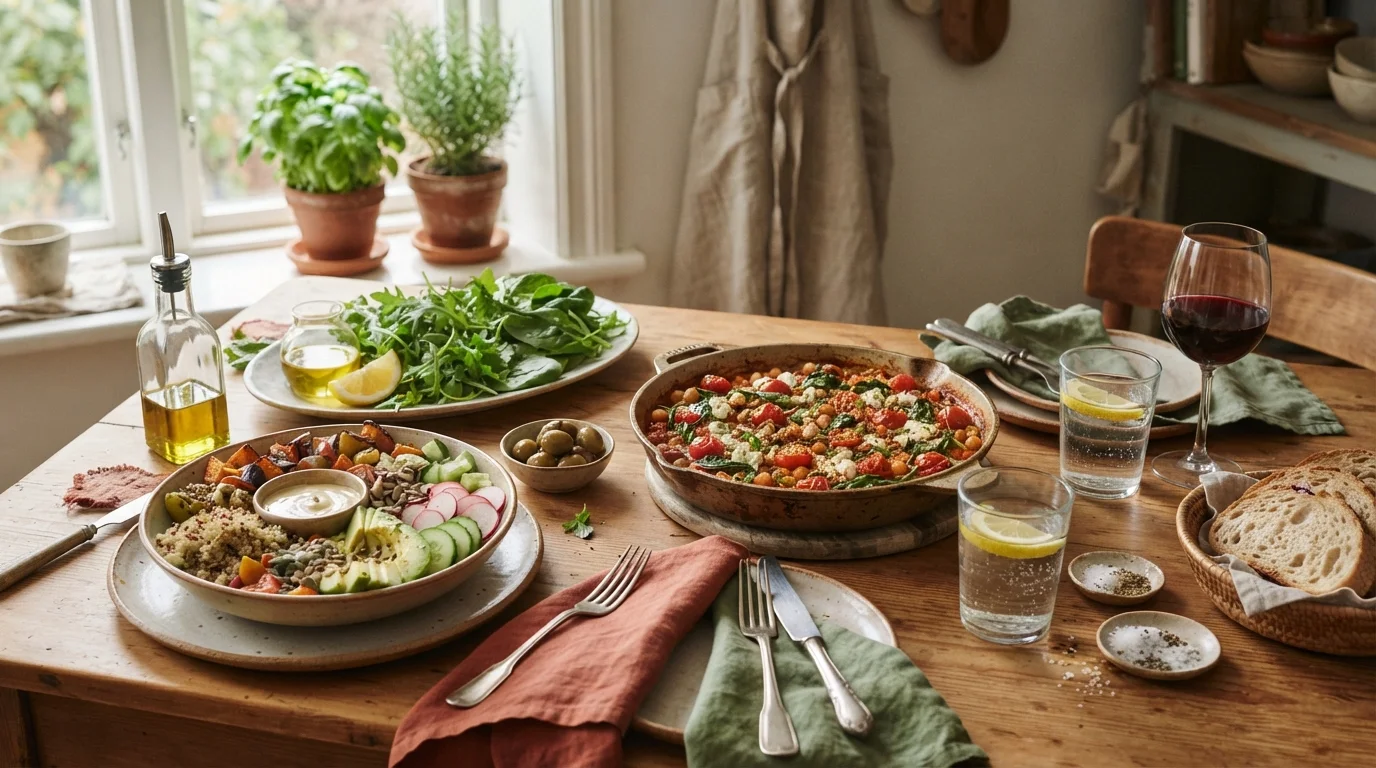
Mediterranean Diet Recipes: 6 Easy Meals to Try

gemini.google (9)

A good weeknight meal can be simple: vegetables, beans or fish, whole grains, olive oil, and herbs. These Mediterranean diet recipes use familiar ingredients and flexible steps, so you can adapt them to your kitchen, budget, and taste. You’ll find beginner-friendly tips, six recipes for different meals, and ideas for building dinners that are satisfying without requiring specialty ingredients. The Mediterranean diet is a broad way of eating, not a rigid meal plan—so use these recipes as a starting point, not a set of rules.

What Are Mediterranean Diet Recipes?

Mediterranean diet recipes are meals inspired by eating patterns common in countries around the Mediterranean Sea. They often feature vegetables, fruits, beans, lentils, whole grains, nuts, seeds, olive oil, and herbs, with fish, eggs, dairy, or poultry in varying amounts. The approach emphasizes overall food patterns rather than one official list of approved dishes.

The region is culturally diverse, so there is no single “authentic” menu. Ingredients and cooking styles vary from place to place, and a practical home version can reflect local produce, dietary needs, and budget. The goal is to make plant foods a regular part of meals, use fats such as olive oil in place of some less-unsaturated fats, and enjoy food in a flexible way.

How to Build an Easy Mediterranean-Style Meal

You do not need a full pantry makeover to get started. Choose a grain or other base, add vegetables, include a source of protein, and finish with flavor from herbs, citrus, spices, or a small amount of sauce.

A simple meal-building formula:

  1. Choose a base: brown rice, bulgur, whole-wheat pasta, barley, or whole-grain bread.
  2. Add vegetables: fresh, frozen, or canned vegetables all work. Rinse canned vegetables when appropriate.
  3. Include protein: try beans, lentils, fish, eggs, tofu, poultry, or yogurt.
  4. Add flavor: use olive oil, garlic, lemon, vinegar, herbs, spices, or olives.
  5. Adjust to your needs: consider allergies, medical guidance, budget, and what you enjoy.

These steps help make easy Mediterranean diet recipes from ingredients you may already have. For example, canned chickpeas, frozen spinach, rice, and lemon can become a quick bowl without a complicated sauce. A can of fish, whole-grain toast, and sliced tomatoes can make a simple lunch.

Easy Mediterranean Diet Recipes for Beginners


If you are new to this way of cooking, begin with recipes that use familiar ingredients and forgiving methods. These options are designed to be flexible. Adjust seasoning to taste, and use substitutions that fit your preferences.

1. Chickpea, tomato, and spinach skillet

Ingredients

  • 1 tablespoon olive oil
  • 2 garlic cloves, minced
  • 1 can chickpeas, drained and rinsed
  • 1 can chopped tomatoes
  • 2 handfuls fresh spinach, or frozen spinach thawed and drained
  • Dried oregano, black pepper, and lemon juice
  • Optional: crumbled feta or plain yogurt

Method: Warm olive oil in a skillet over medium heat. Add garlic and cook briefly, then stir in chickpeas, tomatoes, oregano, and pepper. Simmer until hot and slightly thickened. Stir in spinach until wilted, then finish with lemon. Serve with whole-grain bread, brown rice, or barley.

To save time, use garlic powder instead of fresh garlic and frozen spinach instead of fresh. If you use feta, taste the dish before adding salt because feta can be salty.

2. Lemon-herb lentil salad

Ingredients

  • 2 cups cooked lentils, cooled
  • 1 cucumber, diced
  • 1 cup chopped tomatoes
  • ¼ red onion, finely chopped
  • Chopped parsley or mint
  • Olive oil, lemon juice, and black pepper

Method: Combine lentils, cucumber, tomatoes, onion, and herbs in a bowl. Dress with olive oil, lemon juice, and pepper. Chill briefly if you have time, or serve right away.

This salad works as a lunch, side dish, or filling for a whole-grain wrap. If using canned lentils, drain and rinse them first. Add chopped bell pepper, olives, or a spoonful of plain yogurt to change the flavor and texture.

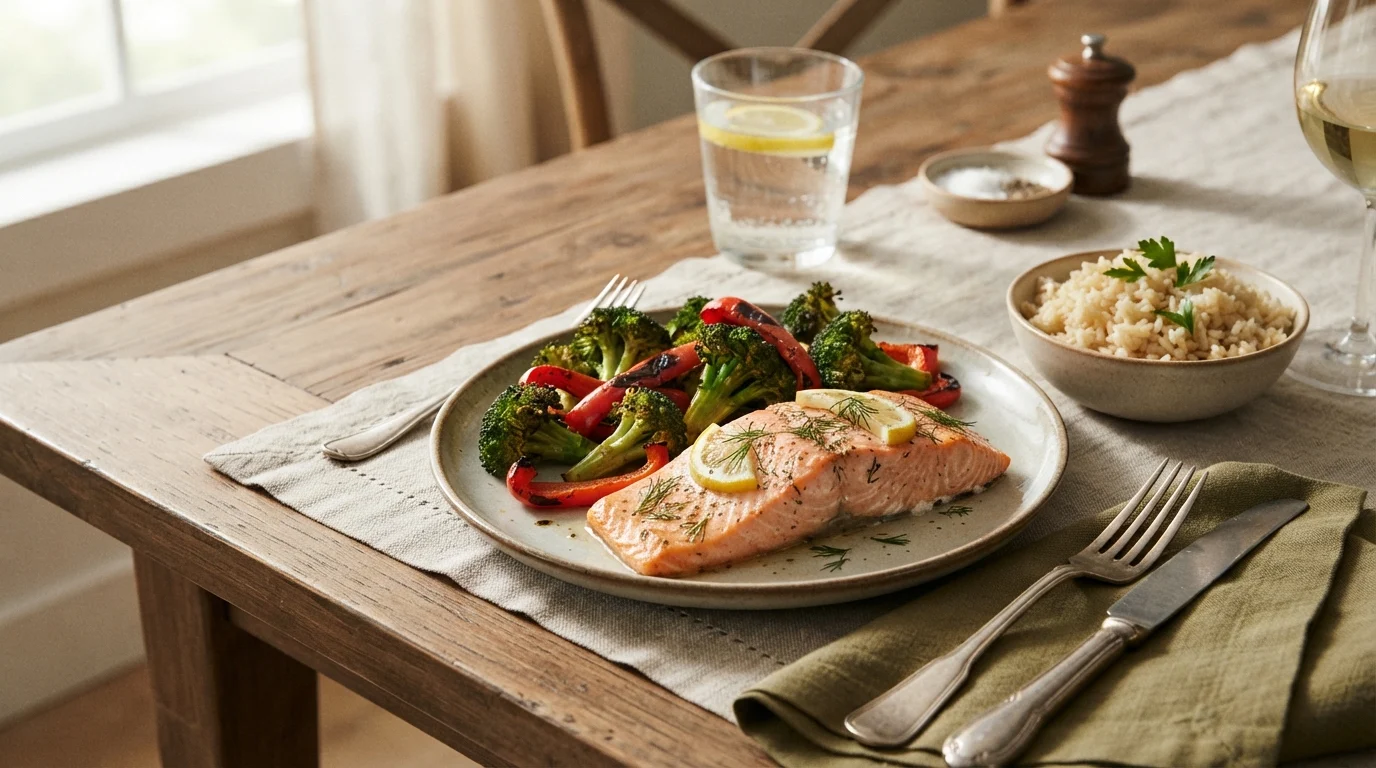
3. Sheet-pan salmon with vegetables

Ingredients

  • Salmon portions
  • Broccoli florets and sliced bell pepper
  • Olive oil
  • Lemon, dried oregano, and black pepper
  • Cooked whole grains to serve

Method: Heat the oven to a temperature recommended by a trusted food-safety source for your equipment and ingredients. Arrange salmon and vegetables on a lined pan, leaving space between pieces. Add olive oil, lemon, oregano, and pepper. Bake until the salmon reaches a safe internal temperature and the vegetables are tender.

Cooking time depends on the thickness of the fish and your oven. Use a food thermometer rather than relying only on color or timing. For a lower-cost alternative, use canned salmon in a grain bowl or choose another fish that is available locally.

Mediterranean Diet Recipes Dinner Ideas

A satisfying dinner usually needs more than a side salad. Pair a protein source with vegetables and a grain, or make a one-pot meal that brings several food groups together.

4. Whole-wheat pasta with white beans

Ingredients

  • Whole-wheat pasta
  • Olive oil and minced garlic
  • 1 can cannellini or butter beans, drained and rinsed
  • Chopped tomatoes or halved cherry tomatoes
  • Spinach or kale
  • Lemon zest, black pepper, and optional grated cheese

Method: Cook pasta according to package directions. Meanwhile, warm olive oil and garlic in a pan, then add beans and tomatoes. Stir in spinach until wilted. Toss with drained pasta, lemon zest, and pepper. Add a splash of pasta water if needed to loosen the sauce.

This dish makes a useful template for Mediterranean diet recipes dinner planning: keep pasta, beans, and a vegetable on hand, then vary the herbs or produce. If you need a gluten-free option, choose pasta that suits your dietary requirements and follow its cooking directions.

5. Stuffed bell peppers with brown rice and lentils

Ingredients

  • Bell peppers, halved and seeded
  • Cooked brown rice
  • Cooked lentils
  • Chopped tomatoes
  • Ground cumin, paprika, and black pepper
  • Optional: chopped parsley or crumbled cheese

Method: Mix rice, lentils, tomatoes, and seasonings. Spoon the filling into pepper halves and place them in a baking dish. Add a little water to the dish, cover, and bake until the peppers soften and the filling is hot. Follow a reliable cooking guide for oven temperature and timing, since pepper size and oven performance vary.

Cook extra rice and lentils ahead of time to make this a quicker meal. The filling can also be served in a bowl if you do not have time to bake the peppers.

6. Greek-inspired grain bowl

Ingredients

  • Cooked bulgur, farro, or brown rice
  • Cucumber, tomatoes, and leafy greens
  • Chickpeas or grilled chicken
  • Olives and optional feta
  • Plain yogurt, lemon juice, and chopped dill

Method: Divide the grain among bowls. Add vegetables, chickpeas or chicken, and optional olives or feta. Stir lemon and dill into plain yogurt for a quick dressing. Keep components separate if preparing meals ahead, then combine just before eating.

This bowl is easy to customize across seasons. Swap cucumber for roasted squash, use a different bean, or replace the grain with another whole grain you enjoy.

Mediterranean Diet Recipes for Weight Loss: What to Know

Some people look for Mediterranean diet recipes for weight loss because they want meals based on vegetables, beans, whole grains, and other satisfying foods. However, no recipe or eating pattern guarantees weight loss. Body weight can be affected by health conditions, medications, sleep, activity, access to food, and many other factors.

If weight management is a goal, focus on a sustainable pattern rather than labeling individual foods as “good” or “bad.” Consider serving size, hunger, satisfaction, and how meals fit into your day. Adding beans or vegetables to a meal can make it more filling for some people, but individual needs differ.

A few practical adjustments can help keep meals balanced:

  • Include a source of protein, such as beans, lentils, eggs, fish, tofu, or poultry.
  • Add vegetables or fruit in a form you enjoy.
  • Use olive oil and other calorie-containing ingredients in amounts that suit your needs.
  • Choose water or another drink that aligns with your health goals.
  • Avoid strict rules that make the eating pattern difficult to maintain.

If you have a medical condition, a history of disordered eating, or specific nutrition needs, seek advice from a registered dietitian or qualified clinician. General recipes are not a substitute for personalized care.

Make the Recipes Fit Your Kitchen

The most useful Mediterranean diet recipes for beginners are the ones you can repeat. Use canned beans when cooking from scratch is not practical, choose frozen vegetables when fresh produce is costly or unavailable, and substitute grains based on what local stores carry.

Keep a short list of reliable combinations. For instance, pair lentils with tomatoes and herbs, or serve fish with vegetables and a grain. Leftovers can become lunch the next day; store them safely and follow food-safety guidance for refrigeration and reheating.

A few flexible swaps:

  • Use chickpeas instead of white beans.
  • Replace spinach with kale, chard, or another leafy green.
  • Swap lemon for vinegar when citrus is unavailable.
  • Choose a local whole grain in place of bulgur or farro.
  • Use fresh, frozen, or no-salt-added canned vegetables depending on price and convenience.

Frequently Asked Questions

What are the easiest Mediterranean diet recipes for beginners?

Start with meals that use a few familiar ingredients, such as chickpea and tomato skillet, lentil salad, or a grain bowl. Canned beans, frozen vegetables, and cooked whole grains can reduce prep time. Pick one recipe, make it once, then adjust the seasoning or vegetables to suit your taste.

Can Mediterranean diet recipes be vegetarian?

Yes. Beans, lentils, chickpeas, nuts, seeds, tofu, eggs, and dairy can all contribute to vegetarian meals, depending on your diet. A grain bowl with chickpeas or pasta with white beans can be filling options. Check ingredient labels if you avoid animal-derived products or have allergies.

What is a good Mediterranean diet dinner?

A practical dinner can combine vegetables, a protein source, and a grain. For example, serve salmon with broccoli and brown rice, or make a chickpea and tomato skillet with whole-grain bread. Adjust ingredients and portions to your appetite, preferences, and any dietary guidance you follow.

Are Mediterranean diet recipes good for weight loss?

They can be part of an eating pattern used by some people pursuing weight management, but recipes alone do not cause weight loss. Individual results depend on many factors, including health and overall habits. For personalized nutrition advice, speak with a registered dietitian or qualified healthcare professional.

Do I need expensive ingredients to follow the Mediterranean diet?

No. The approach can use accessible foods such as dried or canned beans, oats, seasonal produce, frozen vegetables, and locally available grains. Olive oil, fish, and specialty ingredients may cost more in some places, so adapt recipes to your budget and availability rather than treating any one ingredient as required.

Start with One Recipe You’ll Make Again

A flexible approach makes this style of cooking easier to maintain. Build meals around vegetables, beans or another protein, whole grains, and flavors you enjoy. Use the recipes as templates, not strict rules, and make substitutions based on your location, budget, and dietary needs.

Choose one of these Mediterranean diet recipes for your next meal, then save the version you liked best. Add another recipe when you’re ready, and use the internal guides below to plan your pantry and week.

Picture of Ethan Strong

Ethan Strong

I am a dynamic force in the realm of health and fitness, driven by a lifelong passion for wellness. With a background in health sciences and nutrition, I have emerged as a respected authority, dedicated to empowering others on their journey to optimal well-being. Through engaging community initiatives and curated content, I share expert advice, inspiring success stories, and top-quality supplements to support diverse health goals. My unwavering commitment to fostering positive change continues to leave a lasting impact, inspiring individuals to embrace healthier lifestyles and unlock their fullest potential.

Related Posts

Leave a Reply

Your email address will not be published. Required fields are marked *