

Better Skin Naturally: A Holistic Guide to Healthy, Clear, and Radiant Skin
Healthy skin is often treated like a surface-level goal. We chase creams, serums, treatments, and trends, hoping the next product will finally unlock that smooth, glowing look we see everywhere. But better skin is rarely built from the outside alone. It’s shaped quietly, day by day, by how we eat, sleep, think, move, and manage stress. Skin is not separate from the body—it is a visible reflection of what’s happening beneath the surface.
This article is not about quick fixes or miracle products. It’s about understanding skin as a living, responsive organ and learning how to support it in ways that last. Better skin comes from balance, consistency, and patience. When you stop fighting your skin and start working with it, real change becomes possible.
How Daily Habits Quietly Shape Your Skin (And Why Products Aren’t Enough)
Beautiful skin is often framed as a result of the right product, the right routine, or the right treatment. But skin doesn’t live in a bottle. It lives in a body that eats, sleeps, reacts, and recovers every single day. What your skin looks like today is the result of habits repeated quietly over time, not a single decision made in front of the mirror.
Skin responds to rhythm. When meals are irregular, sleep is inconsistent, or stress is constant, skin adapts by becoming reactive. Breakouts, dryness, sensitivity, and premature aging are not random—they are feedback. Skin is often the first place where imbalance becomes visible.
Daily hydration plays a role, but not in the simplistic “drink more water” sense. Hydration works when electrolytes, digestion, and kidney function are balanced. Similarly, movement supports circulation, delivering oxygen and nutrients to skin cells. Too little movement slows repair. Too much stress-driven exercise can inflame it.
The nervous system is another quiet influence. Chronic tension keeps the body in survival mode, reducing collagen production and slowing regeneration. Skin heals best when the body feels safe. This is why people often notice better skin during restful periods, even without changing products.
Long-term skin health comes from habits that can be repeated without burnout. Regular meals, stable sleep, gentle movement, and emotional regulation matter far more than trends. Products support skin—but habits decide how well skin responds.
When daily life becomes calmer and more consistent, skin often follows without being forced
Understanding What “Better Skin” Really Means
Better skin does not mean perfect skin. Perfection is an illusion created by lighting, filters, and genetics. Real skin has texture, pores, variation, and history. A healthier definition of better skin includes clarity, comfort, resilience, and recovery. It’s skin that heals faster, reacts less, and feels calm most of the time.
When skin is supported internally, it becomes more forgiving. Breakouts heal faster. Dryness improves. Sensitivity reduces. Even tone becomes more achievable—not because you forced it, but because your body is functioning well.
This shift in perspective is important. When expectations align with biology, frustration fades. And with less frustration comes better habits.
Skin as a Reflection of Internal Health
Your skin is deeply connected to digestion, hormones, circulation, and the nervous system. When something is off internally, skin is often one of the first places it shows. That’s why focusing only on topical solutions often leads to short-term results.
Digestive imbalances can affect nutrient absorption, leaving skin undernourished even when you eat well. Hormonal fluctuations influence oil production, inflammation, and breakouts. Chronic stress alters blood flow and repair processes, slowing healing and increasing sensitivity.
Better skin begins with asking a different question—not “What product should I use?” but “What might my skin be responding to?”
Nutrition and Skin Health: Feeding the Skin From Within
Skin cells renew constantly, and that renewal depends on raw materials. Protein supports structure and repair. Healthy fats maintain the skin barrier. Vitamins and minerals regulate inflammation and collagen production.
Eating consistently is just as important as eating well. Irregular meals can destabilize blood sugar, increasing stress hormones that worsen breakouts and dullness. Hydration also plays a role—not as a magic fix, but as a basic requirement for cellular function.
Better skin-friendly eating patterns are not restrictive. They are steady. They prioritize nourishment over control. When the body feels safe and supported, skin follows.
The Role of Hormones in Skin Clarity and Texture
Hormones influence nearly every aspect of skin behavior. Fluctuations in estrogen, progesterone, insulin, and cortisol affect oil production, inflammation, and healing speed. This is why skin often changes during stress, menstrual cycles, pregnancy, or periods of poor sleep.
Supporting hormonal balance doesn’t require extreme protocols. It starts with consistent meals, adequate sleep, gentle movement, and stress awareness. These basics regulate hormonal signaling far more effectively than aggressive interventions.
When hormones stabilize, skin becomes more predictable. That predictability makes care simpler—and results more sustainable.
Stress, Inflammation, and Skin Aging
Chronic stress accelerates skin aging in subtle but powerful ways. Elevated stress hormones reduce collagen production, impair barrier function, and slow repair. Over time, this contributes to dullness, fine lines, sensitivity, and prolonged breakouts.
Managing stress is not about eliminating it. It’s about reducing constant activation. Creating moments of calm—through sleep routines, quiet mornings, breathing, or gentle movement—allows the skin to shift from survival mode into repair mode.
Skin does its best work when the nervous system feels safe.
Sleep: The Most Underrated Skin Treatment
During sleep, the body repairs tissue, balances hormones, and restores barrier function. Poor sleep disrupts this process, leading to increased inflammation, slower healing, and heightened sensitivity.
Consistent sleep schedules matter more than perfection. Going to bed and waking up at similar times helps regulate circadian rhythms that guide skin renewal. Over time, better sleep improves tone, texture, and resilience in ways no product can replicate.
Better skin often starts with better rest.
Building a Simple, Supportive Skincare Routine
Topical care still matters—but less is often more. Overloading the skin with products can disrupt its natural balance. A supportive routine focuses on cleansing gently, moisturizing adequately, and protecting from environmental damage.
Consistency beats complexity. Using fewer products regularly is more effective than switching routines constantly. Skin thrives on familiarity. When irritation decreases, clarity improves.
Products should support the skin barrier, not challenge it.
Patience: The Missing Ingredient in Skin Transformation
Skin changes slowly. Cell turnover takes weeks, not days. Hormonal shifts take months. Expecting immediate results leads to overcorrection, which often worsens the problem.
Better skin is built quietly through repetition. When habits become routine, skin responds gradually but reliably. This patience creates confidence—not because skin becomes flawless, but because it becomes manageable.
That sense of ease is often the true marker of success.
A Long-Term Relationship With Your Skin
Better skin is not a destination. It’s a relationship that evolves with age, lifestyle, and circumstance. What works now may need adjustment later. Flexibility keeps the relationship healthy.
When skin care shifts from control to care, something important changes. You stop reacting and start responding. You listen more closely. And your skin, in turn, becomes more cooperative.
In the end, better skin is not about perfection. It’s about comfort, confidence, and resilience. And those qualities are built from the inside out.
The Gut–Skin Connection: Why Clear Skin Starts in the Digestive System
Healthy skin does not begin at the mirror. It begins much deeper, in a place most people never associate with beauty at all: the gut. The digestive system quietly influences inflammation, nutrient absorption, hormone regulation, and immune response—all of which directly affect how skin behaves. When the gut struggles, skin often speaks up first.
Many people experience persistent acne, dullness, redness, or sensitivity even while using high-quality skincare. This is not a failure of products. It’s a sign that topical care is being asked to do a job that belongs to internal balance.
The gut and skin communicate constantly through what scientists call the gut–skin axis. When digestion is smooth and the gut lining is strong, the body absorbs nutrients efficiently and inflammation remains controlled. When digestion is disrupted, inflammatory compounds can enter circulation, triggering immune responses that show up as breakouts, rashes, or accelerated aging.
Poor digestion doesn’t always feel dramatic. It can exist quietly as bloating, irregular bowel movements, fatigue after meals, or cravings. Over time, these subtle issues create nutrient gaps. Skin cells, which renew rapidly, are especially sensitive to these gaps. Without enough amino acids, zinc, essential fats, and antioxidants, repair slows and resilience weakens.
Gut health also influences hormones that affect skin. Insulin regulation, cortisol balance, and estrogen metabolism all rely on digestive function. When the gut is inflamed or sluggish, hormonal fluctuations become more intense. This is why many people notice cyclical breakouts, jawline acne, or sudden texture changes during periods of stress or dietary inconsistency.
Supporting gut health for better skin does not require extreme cleanses or restrictive protocols. In fact, aggressive gut “fixes” often worsen skin by adding stress. The most skin-friendly approach is steady nourishment. Regular meals, adequate protein, fiber-rich foods, and healthy fats help stabilize blood sugar and reduce inflammatory signaling.
Hydration plays a supportive role, not by flushing toxins magically, but by maintaining the mucosal lining of the gut. When hydration is poor, digestion slows, and nutrient transport becomes less efficient. Skin then reflects this internal slowdown through dryness and uneven tone.
Stress is another major player. The gut is highly sensitive to emotional strain. Chronic stress alters gut motility and bacterial balance, increasing permeability and inflammation. This is one reason stress-related breakouts often resist topical treatment. Calming the nervous system becomes a skin strategy, not just a mental health one.
As gut health improves, skin changes often feel gradual but meaningful. Breakouts heal faster. Redness softens. Texture becomes smoother. Skin feels less reactive. These shifts are signs that the body is no longer fighting itself.
Clear skin, in this context, is not forced. It emerges naturally when digestion, hormones, and immunity align.
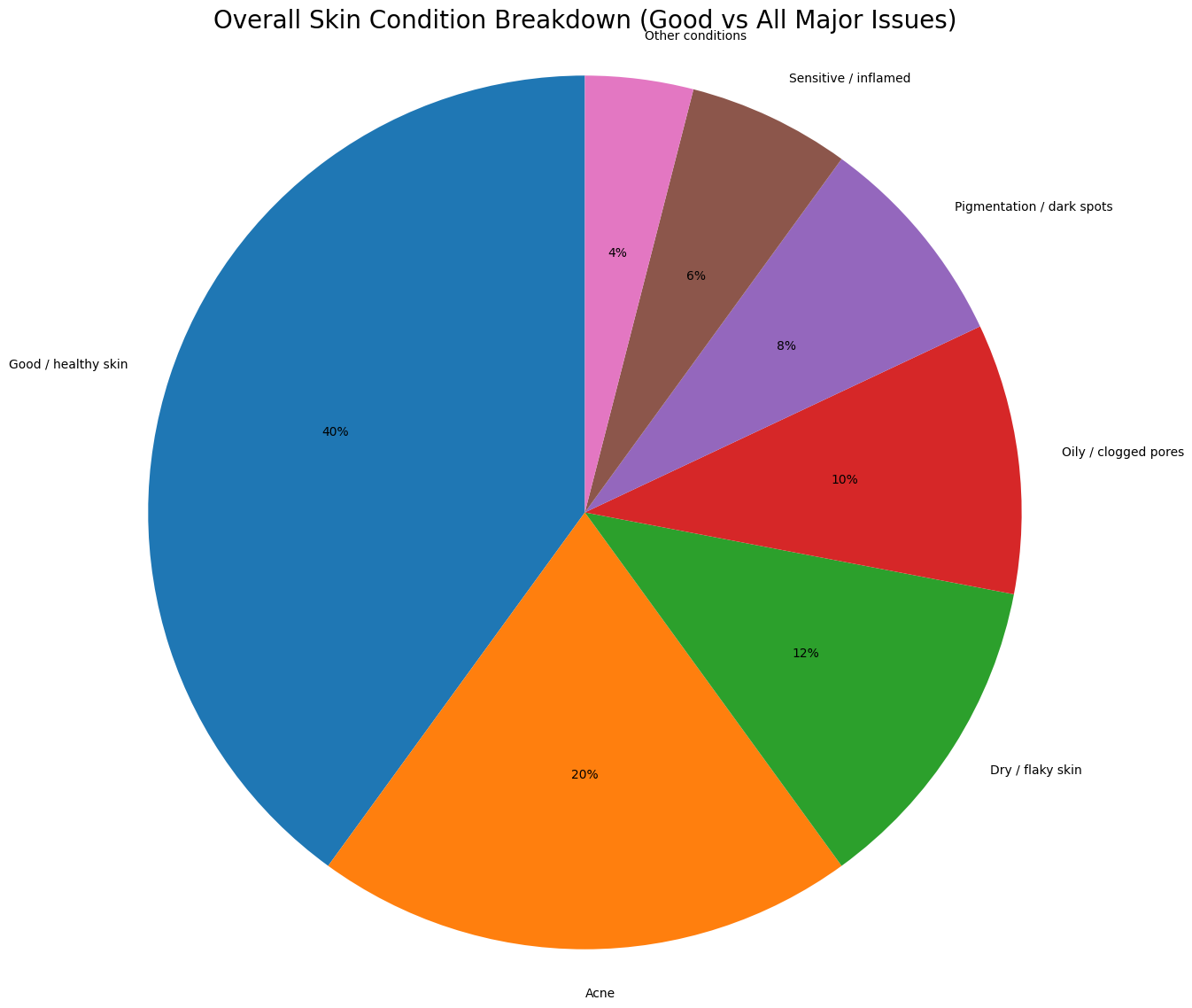
Overall Skin Health Breakdown: Good Skin vs Common Skin Problems
🔥 FAQs DEEP, HUMAN, RICH RESULT READY
❓ Why does my skin look bad even when I use good skincare products?
This is one of the most common and frustrating experiences people have with their skin. Skincare products work on the surface, but skin health is controlled largely by internal systems such as digestion, hormones, sleep quality, and stress levels. When these systems are out of balance, skin often becomes reactive regardless of how expensive or well-formulated the products are.
For example, chronic stress can increase cortisol, which affects oil production and slows skin repair. Poor digestion can reduce nutrient absorption, leaving skin undernourished even if your diet is healthy. Skincare can support the skin barrier, but it cannot override internal imbalance. That’s why real, lasting skin improvement usually begins when internal health is addressed alongside topical care.
❓ Can gut health really affect acne, dull skin, or inflammation?
Yes, gut health plays a significant role in how your skin behaves. The digestive system is responsible for absorbing nutrients that skin cells need for renewal, collagen production, and protection. When digestion is impaired, the skin may show signs such as breakouts, redness, uneven tone, or sensitivity.
An imbalanced gut can also increase systemic inflammation, which often manifests through the skin. Additionally, the gut helps regulate hormones like estrogen. When gut function is compromised, hormonal fluctuations may become more intense, leading to cyclical acne or persistent skin issues. Supporting gut health gently and consistently often leads to calmer, clearer skin over time.
❓ How does stress make skin age faster?
Stress accelerates skin aging through hormonal and inflammatory pathways. When the body is under chronic stress, cortisol levels remain elevated. This hormone breaks down collagen, slows skin regeneration, and weakens the skin barrier. Over time, this can result in fine lines, dullness, sensitivity, and slower healing.
Stress also disrupts sleep and digestion, both of which are essential for skin repair. While occasional stress is normal, prolonged stress without recovery keeps the skin in survival mode rather than repair mode. Managing stress doesn’t mean eliminating it—it means creating regular moments of calm so the body can restore itself.
❓ How long does it take to see skin improvements from lifestyle changes?
Skin responds gradually to internal changes. While topical products may offer temporary improvements within days, deeper changes such as improved texture, clarity, and resilience usually take 4 to 8 weeks of consistent habits.
This timeline aligns with skin cell turnover cycles and hormonal regulation. Patience is essential. When lifestyle changes are sustained—regular meals, better sleep, reduced stress, and gentle skincare—results tend to be more stable and long-lasting compared to quick fixes.
❓ Is aging skin unavoidable, or can habits really slow it down?
Aging is natural, but how skin ages is strongly influenced by daily habits. Chronic stress, poor sleep, inflammation, and nutritional deficiencies accelerate visible aging. On the other hand, consistent nourishment, rest, hydration, and emotional regulation help preserve skin structure and function.
Slowing aging doesn’t mean trying to look younger—it means supporting skin so it remains resilient, comfortable, and healthy as time passes. Skin that ages well tends to heal faster, react less, and maintain a natural glow.
❓ Why does my skin change during stress, travel, or routine disruption?
Skin thrives on rhythm. When routines shift—such as during travel, irregular meals, poor sleep, or emotional stress—the nervous system becomes activated. This affects circulation, digestion, and hormone signaling, all of which influence the skin.
Temporary breakouts or dullness during disruptions are not signs of failure. They’re signals that the body is adapting. Once consistency returns, skin usually stabilizes again. Understanding this prevents overreaction and unnecessary product changes.
❓ Can eating less or dieting affect skin quality?
Yes, restrictive eating can negatively impact skin health. Skin requires adequate calories, protein, fats, vitamins, and minerals to renew itself. When intake is too low, the body prioritizes vital organs over skin, leading to dryness, dullness, breakouts, or premature aging.
Consistent nourishment supports hormonal balance and skin repair. Skin often improves when eating patterns become more regular and supportive rather than restrictive.
❓ What matters more: skincare products or lifestyle habits?
Lifestyle habits form the foundation; skincare products act as support. Products can protect and maintain the skin barrier, but they work best when internal systems are functioning well. Without proper sleep, nutrition, and stress management, even the best skincare struggles to deliver lasting results.
Think of skincare as reinforcement, not the main structure. The structure is built internally.
