
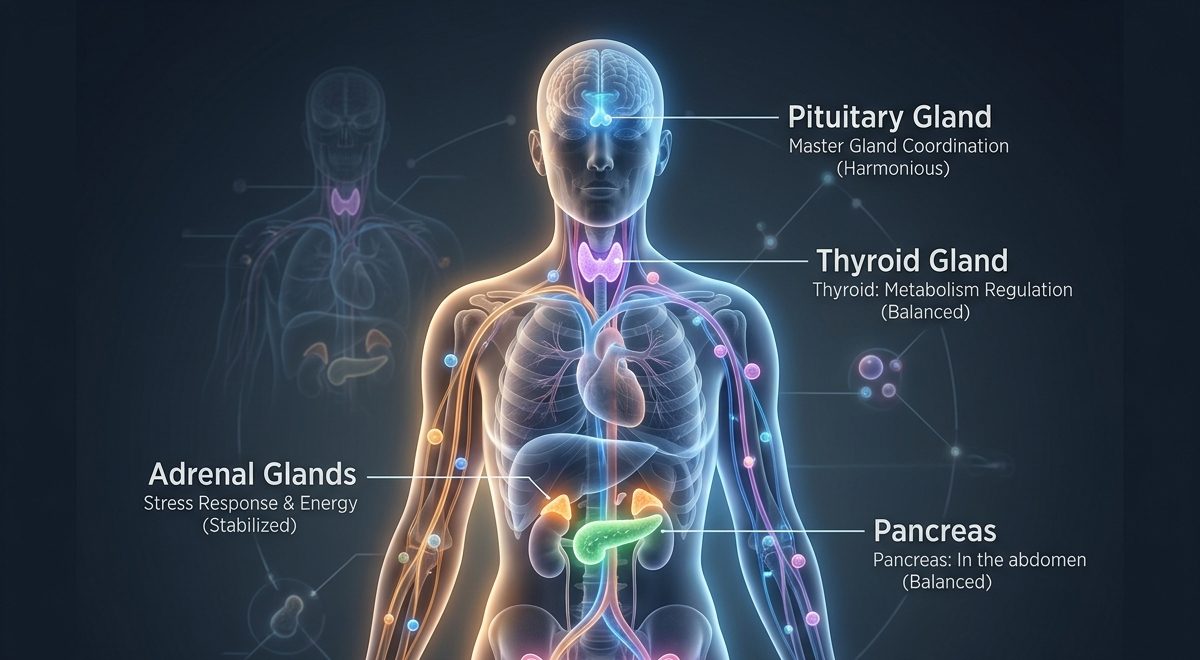
Why Hormones Control More Than You Think
Hormones are chemical messengers that regulate almost every function in the body. From metabolism and energy levels to mood and weight management, hormones play a central role in maintaining balance.
Many people struggle with weight gain, fatigue, or mood changes without realizing that hormones may be the underlying cause. Unlike simple calorie-based explanations, hormonal health determines how the body responds to food, stress, sleep, and activity.
Understanding hormones is the first step toward improving overall health and achieving sustainable weight control.
What Are Hormones and How Do They Work?
Hormones are produced by glands in the endocrine system and travel through the bloodstream to target organs. They act like signals that tell the body what to do and when to do it.
For example, some hormones control hunger, while others regulate how the body stores or burns fat.
The balance of these hormones is crucial. Even small imbalances can disrupt normal body functions.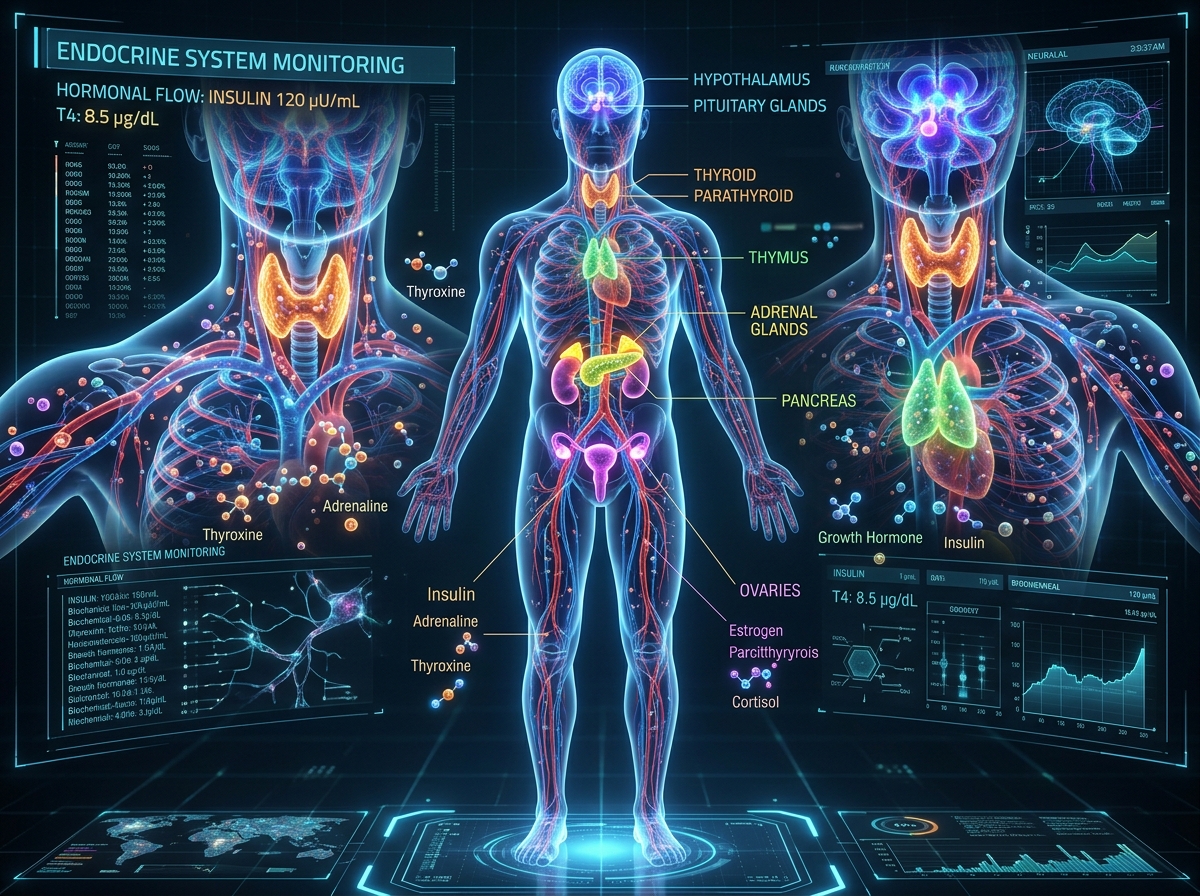
Key Hormones That Affect Health and Weight
Several hormones directly influence metabolism and weight.
Important hormones include:
- Insulin (controls blood sugar and fat storage)
- Cortisol (stress hormone)
- Thyroid hormones (regulate metabolism)
- Estrogen (affects fat distribution)
- Leptin and ghrelin (control hunger and appetite)
Each of these hormones plays a unique role, but they work together as a system.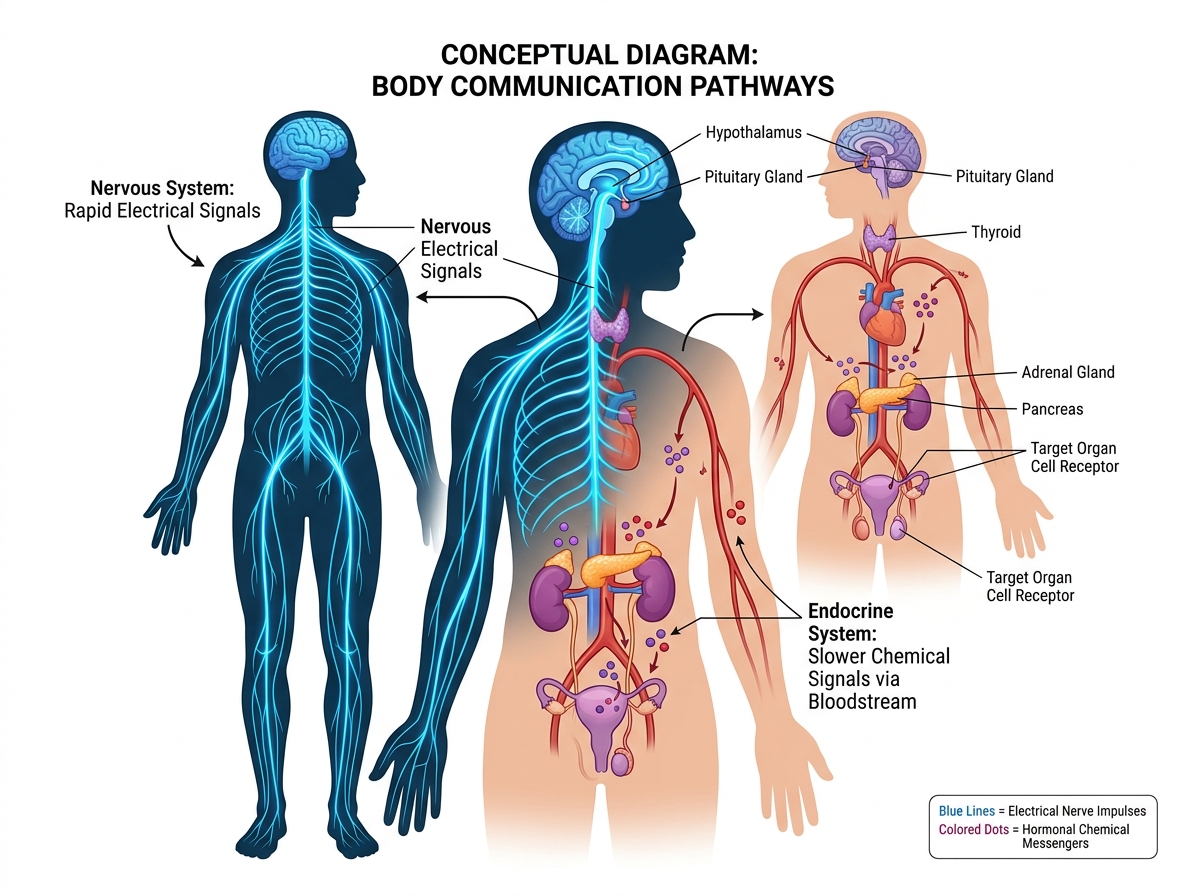
Hormones and Their Functions
| Hormone | Function |
|---|---|
| Insulin | Controls blood sugar |
| Cortisol | Manages stress response |
| Thyroid | Regulates metabolism |
| Estrogen | Influences fat storage |
| Leptin | Signals fullness |
How Hormones Influence Weight Gain
Hormones determine whether the body burns calories or stores them as fat. When hormones are balanced, the body maintains a healthy weight.
When imbalanced, the body may store more fat, increase hunger, and reduce energy levels. This makes weight loss difficult even with proper diet.
Signs of Hormonal Imbalance
The body provides signals when hormones are not functioning properly.
Common signs:
- Unexplained weight gain
- Fatigue and low energy
- Mood swings
- Sleep disturbances
- Increased cravings

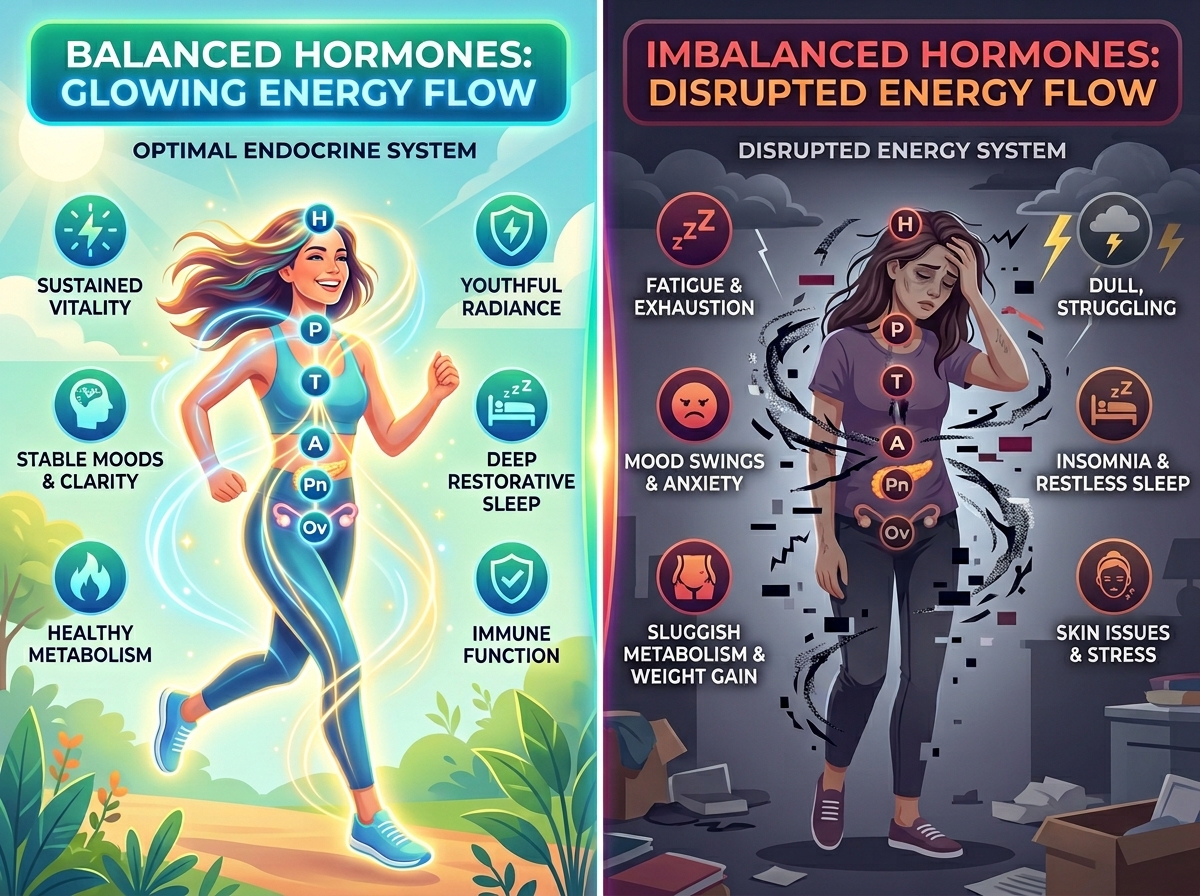
Hormones are the control system of the body. Understanding their role helps explain why weight and health are not only about diet but also about internal balance.
When Hormones Disrupt the Body
Hormonal imbalance can significantly affect how the body functions. It can slow metabolism, increase fat storage, and affect appetite.
This is why some people struggle with weight despite eating healthy and exercising.
Insulin and Fat Storage
Insulin regulates blood sugar levels. When insulin levels are high, the body stores more fat.
Frequent consumption of sugary or processed foods can lead to insulin resistance, making weight loss difficult.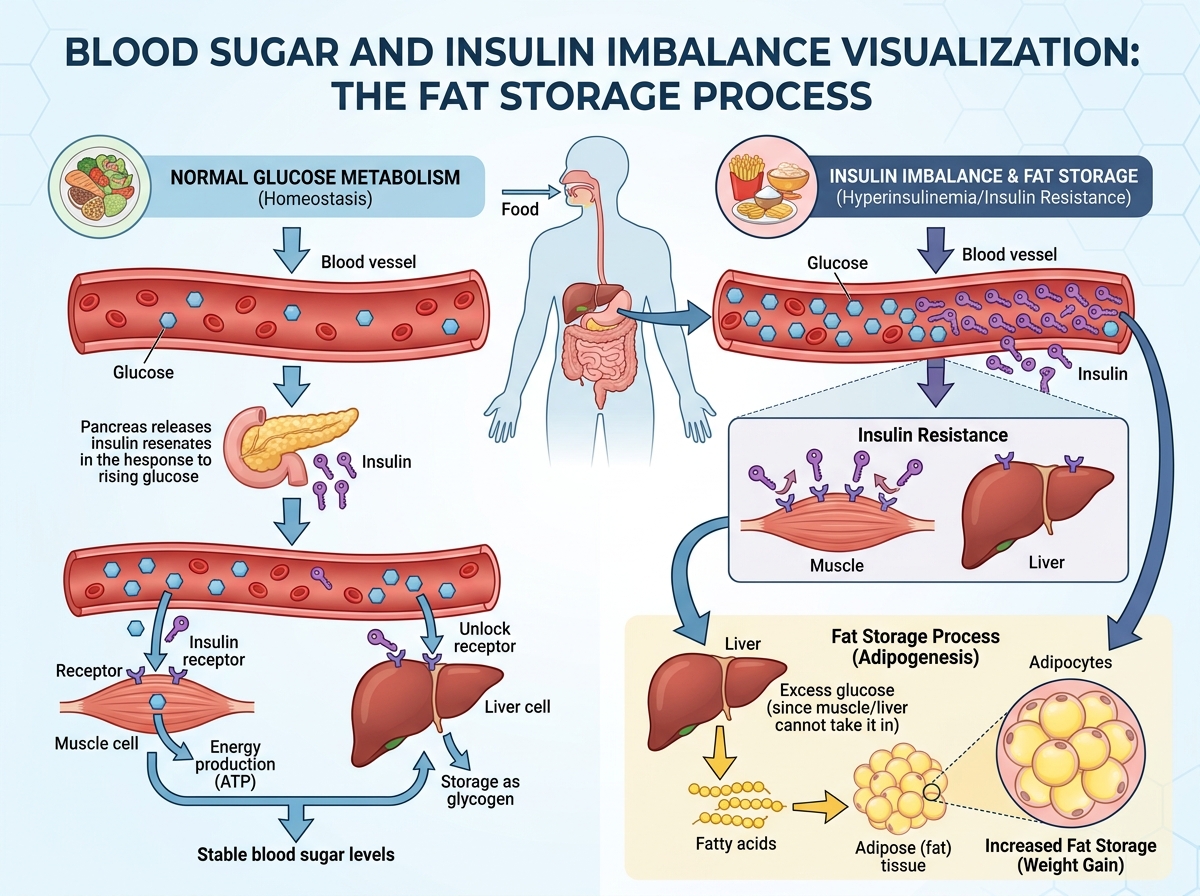
Cortisol and Stress Weight Gain
Cortisol is released during stress. Chronic stress leads to high cortisol levels, which promote fat storage, especially around the abdomen.
Thyroid and Metabolism
The thyroid gland controls how fast the body burns calories. When thyroid function slows down, metabolism decreases, leading to weight gain and fatigue.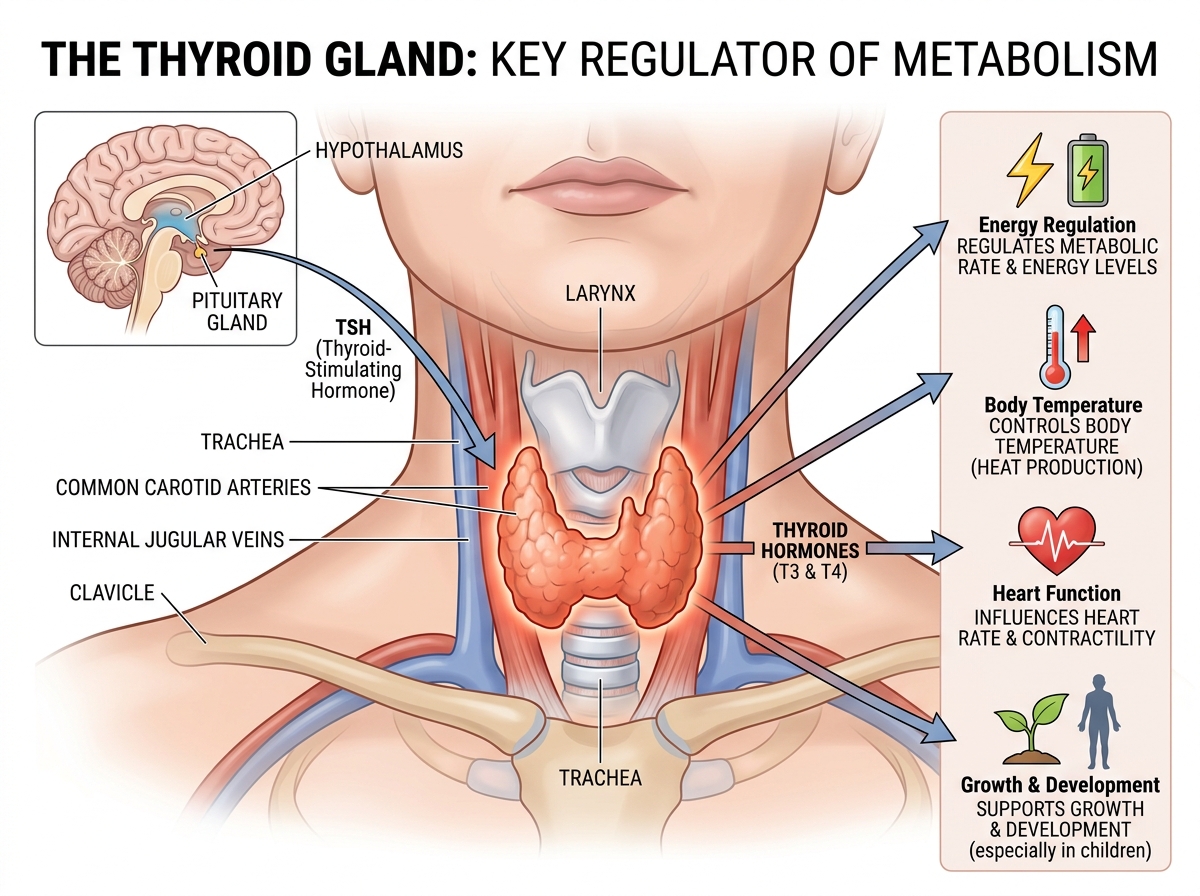
Estrogen and Fat Distribution
Estrogen influences where fat is stored in the body. Imbalance can lead to increased fat accumulation, particularly in certain areas.
Hunger Hormones and Overeating
Leptin and ghrelin control hunger and fullness. When these hormones are imbalanced, appetite increases, leading to overeating.
Effects of Hormonal Imbalance
- Increased fat storage
- Reduced metabolism
- Constant hunger
- Low energy levels
- Difficulty losing weight
Hormone Imbalance and Impact
| Hormone | Imbalance Effect |
|---|---|
| Insulin | Fat storage increase |
| Cortisol | Belly fat gain |
| Thyroid | Slow metabolism |
| Estrogen | Weight fluctuations |
| Leptin | Increased appetite |
Long-Term Health Risks
If left unmanaged, hormonal imbalance can lead to chronic health issues such as obesity, metabolic disorders, and reduced quality of life.
Hormonal imbalance is one of the most important factors behind weight gain. Addressing these imbalances is essential for long-term health.
Restoring Hormonal Balance Naturally
The body has the ability to restore hormonal balance when supported with the right habits. Instead of relying on extreme measures, natural lifestyle changes can improve hormone function.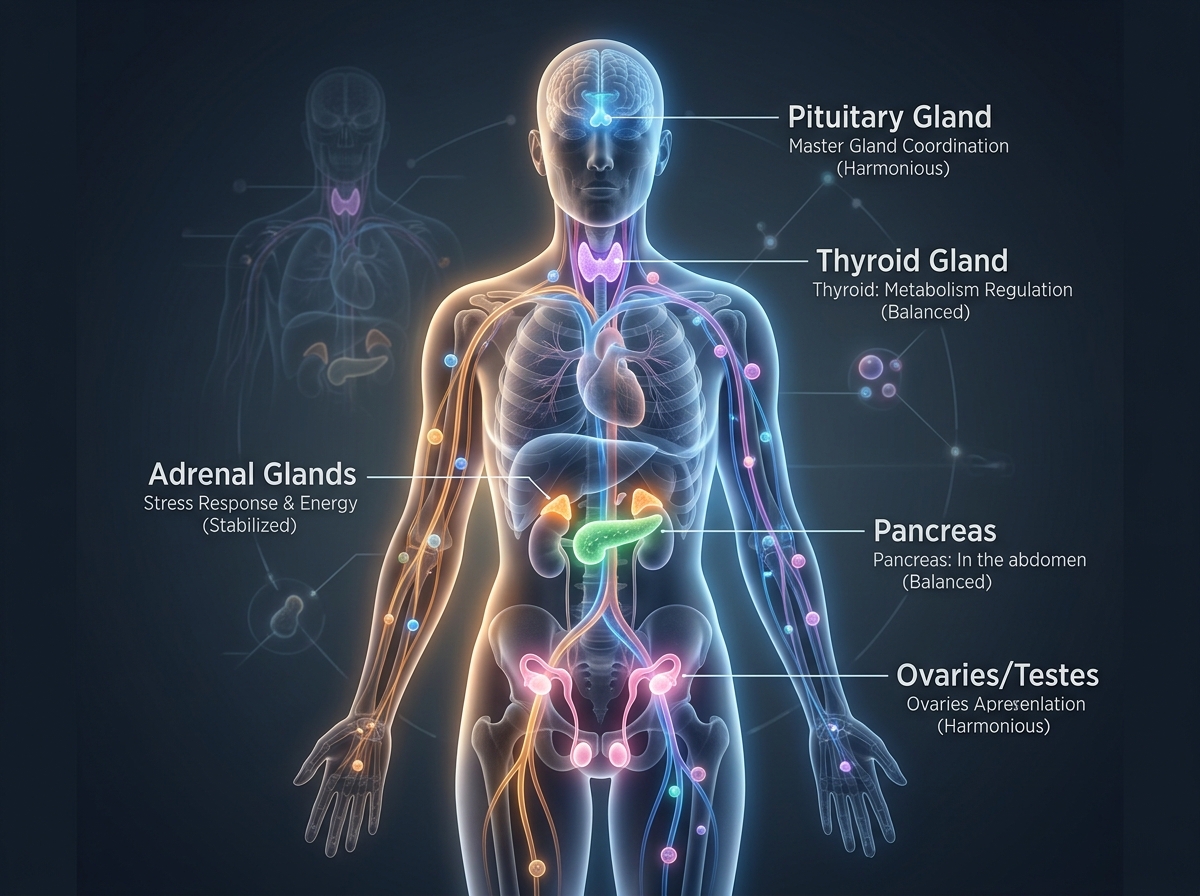
Nutrition for Hormonal Health
Balanced nutrition supports hormone production and function. Whole foods provide essential nutrients that regulate the body.
Physical Activity and Hormone Balance
Exercise improves insulin sensitivity and reduces stress hormones, helping maintain balance.
Sleep and Recovery
Sleep is essential for hormone regulation. Poor sleep disrupts hormone levels and affects weight.
Stress Management
Reducing stress lowers cortisol levels and improves overall hormonal health.
Natural Solutions and Benefits
| Solution | Benefit |
|---|---|
| Healthy Diet | Supports hormone production |
| Exercise | Improves metabolism |
| Sleep | Restores balance |
| Stress Control | Reduces fat storage |
Daily Habits for Hormonal Balance
Simple habits:
- Eat balanced meals
- Stay active
- Sleep properly
- Manage stress
- Stay hydrated

Long-Term Benefits of Balanced Hormones
Balanced hormones lead to stable weight, improved energy, better mood, and overall health.
Hormones play a powerful role in determining health and weight. By understanding and supporting hormonal balance, it is possible to achieve sustainable results.
Consistency and lifestyle choices are the key to long-term success.
