
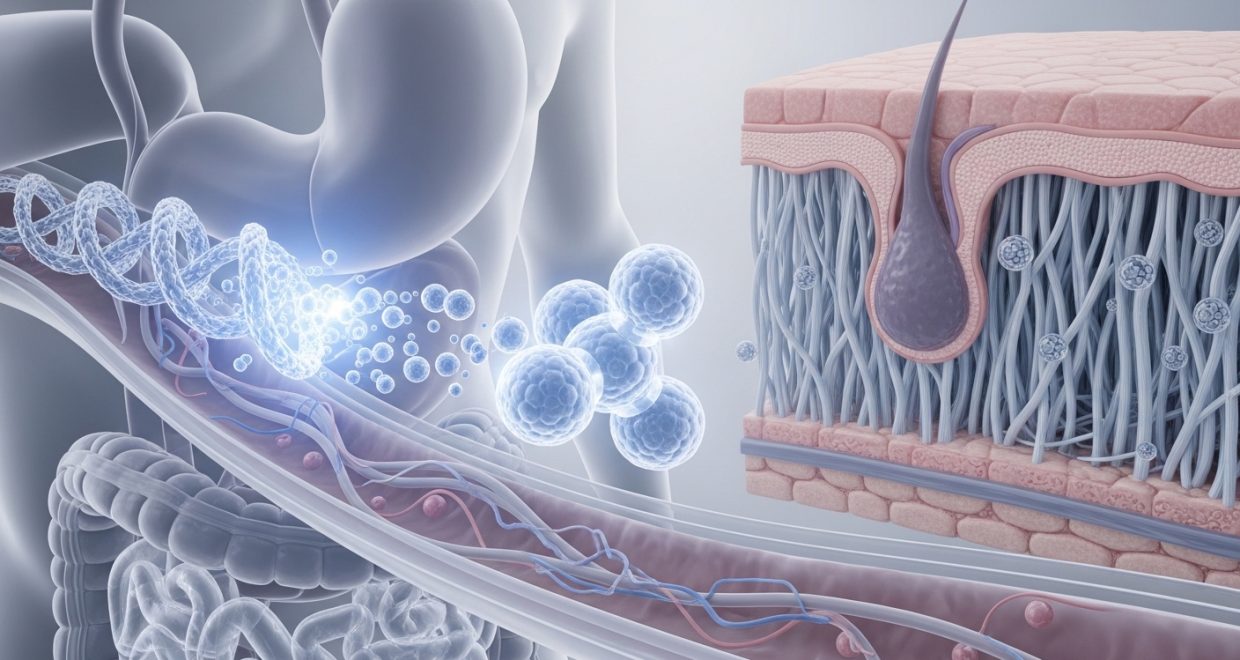
1. The Dalton Barrier: Molecular Weight and Intestinal Permeability
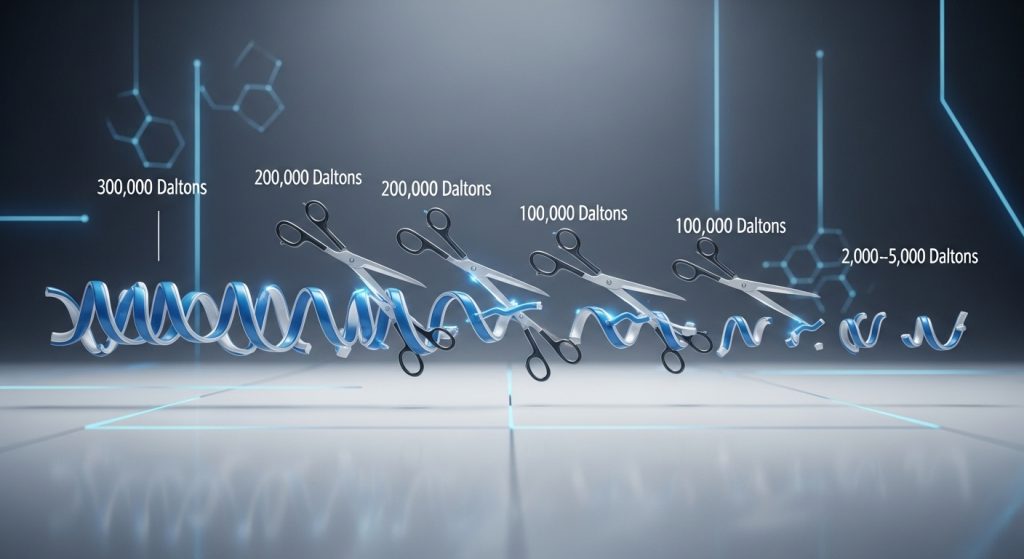
The primary reason collagen supplements fail is a fundamental misunderstanding of molecular scale. In its native state—found in bone broth or animal skin—collagen is a massive triple-helix protein with a molecular weight of approximately 300,000 Daltons (Da). To the human small intestine, this is an impenetrable fortress. Bioavailability begins with Hydrolysis, a process using enzymes or heat to break these long chains into “Collagen Peptides.”
For skin-specific results, the “Sweet Spot” is a molecular weight between 2,000 and 5,000 Daltons. At this size, the peptides are small enough to pass through the intestinal wall via peptide transporters (PEPT1). If your supplement does not specify its Dalton weight or “Hydrolyzed” status, your body likely treats it as a standard protein, breaking it down into basic amino acids rather than the bioactive signaling chains required to trigger skin regeneration.
2. The Messenger Effect: Chemotaxis and Fibroblast Activation
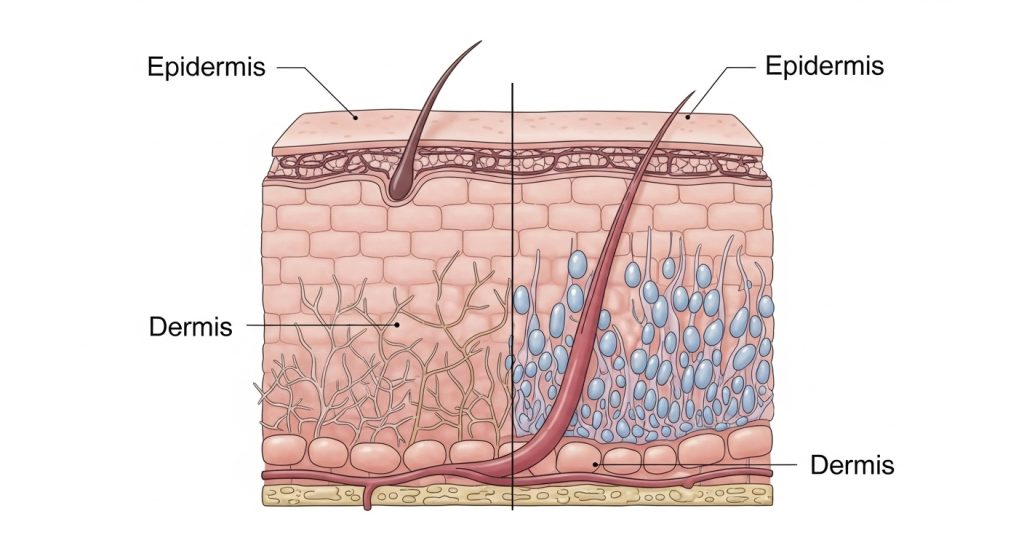
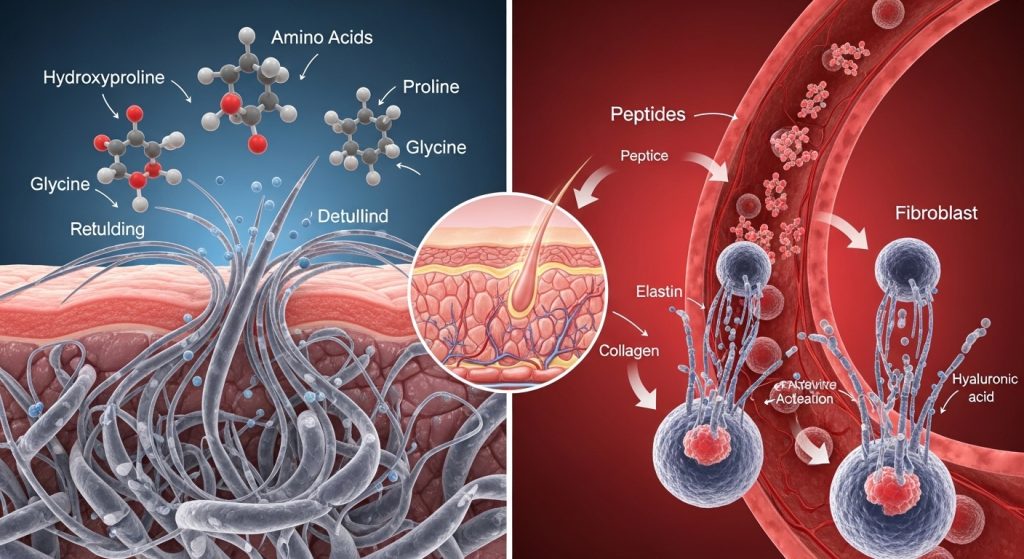
Bioavailable collagen doesn’t just provide “building blocks”; it acts as a biological “signal.” When hydrolyzed peptides enter the bloodstream, they reach the dermis (the deep layer of the skin). Here, they perform a process called chemotaxis, where they attract and activate fibroblasts—the “factory cells” of your skin.
The presence of these peptides “tricks” the body into thinking a massive breakdown of natural collagen has occurred (simulating an injury). In response, the fibroblasts go into overdrive, producing not just new collagen, but also elastin (for snap-back) and hyaluronic acid (for moisture). If your collagen isn’t bioavailable, it never reaches the dermis in peptide form, and this vital “emergency repair” signal is never sent.
3. The Vitamin C Requirement: The Essential Metabolic Catalyst
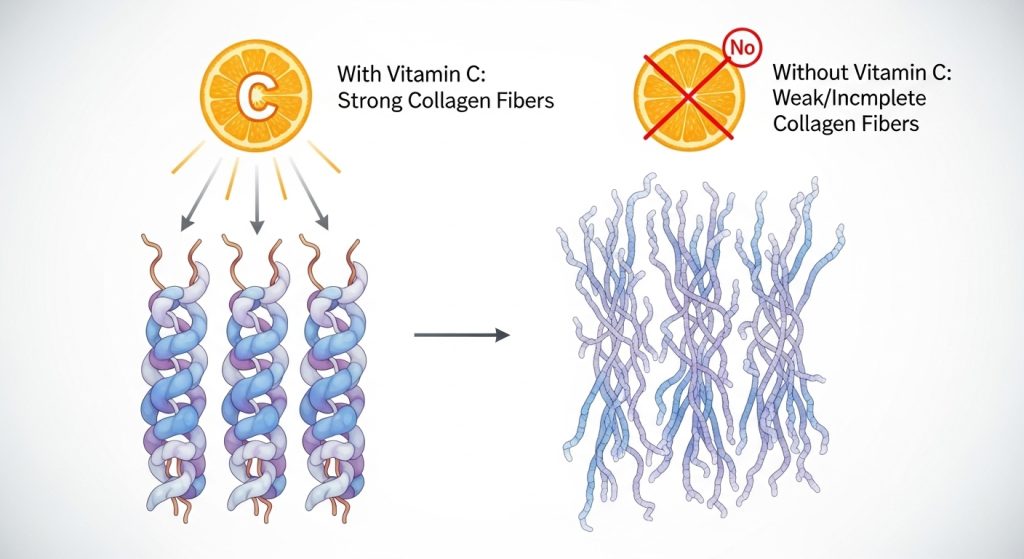
You can ingest the world’s most expensive collagen, but without Vitamin C (Ascorbic Acid), it is biochemically impossible for your body to build new skin structures. Vitamin C is the essential co-factor for the enzymes prolyl hydroxylase and lysyl hydroxylase. These enzymes are responsible for “hydroxylation,” which stabilizes the collagen molecule’s triple helix.
Without this “glue,” the amino acids you absorb remain loose and unstable, unable to be woven into the firm, resilient fibers that prevent sagging. For maximum bioavailability, your supplement must be paired with at least 60–100mg of Vitamin C to ensure the metabolic pathway is “unlocked” and ready for construction.
4. Marine vs. Bovine: Particle Size and Absorption Kinetics
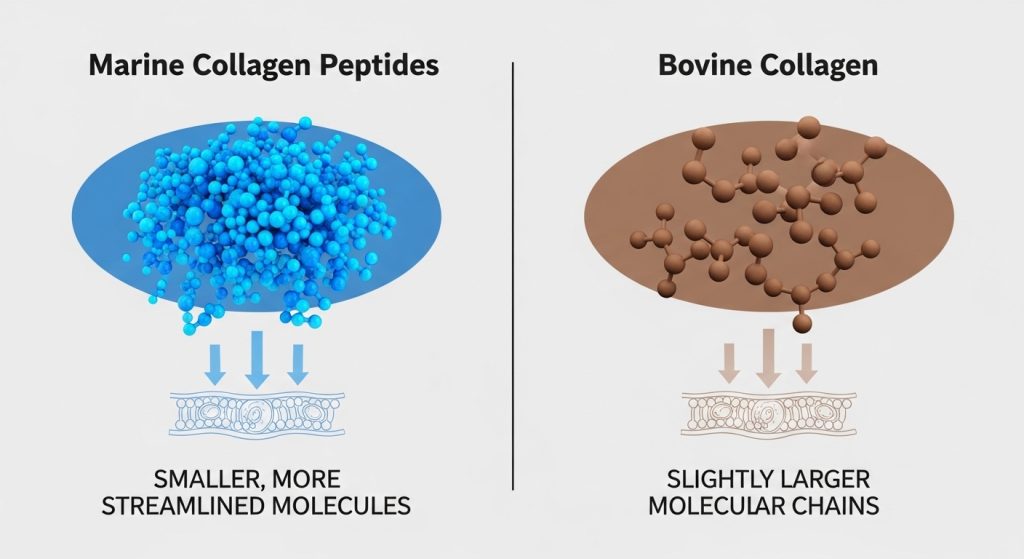
The source of your collagen dictates its “Absorption Kinetic”—or how fast and efficiently it enters your system. Marine Collagen (Type I) is widely considered the gold standard for skin because its particles are up to 1.5 times smaller than Bovine (Cow) or Porcine (Pig) collagen.
While Bovine collagen is excellent for gut health and muscle repair (containing Types I and III), Marine collagen’s lower molecular weight allows for superior “transcellular” transport. This means it moves through the cells of the gut lining more easily. If you have been taking Bovine collagen and seeing no skin results, your body may be struggling with the larger peptide structures, and a switch to Marine-sourced peptides might be the missing link.
Lorem ipsum dolor sit amet, consectetur adipiscing elit. Ut elit tellus, luctus nec ullamcorper mattis, pulvinar dapibus leo.
5. The Role of the PEPT1 Transporter in the Small Intestine
Bioavailability is a bottleneck game played in the small intestine. Specifically, we rely on the PEPT1 (Peptide Transporter 1). This transporter is responsible for moving di-peptides and tri-peptides (the smallest forms of collagen) from the gut lumen into the blood.
If you take too much collagen at once (over 20g), you can “saturate” these transporters, leading to wasted product that simply passes through your system. Furthermore, if you take collagen with a heavy meal containing other proteins (like a steak), the collagen peptides must compete with the amino acids from the food for the same transporters. For the highest bioavailability, take your collagen 30 minutes before a meal or 2 hours after, ensuring the “gateways” are clear.
6. The "Collagen Killers": Glycation and Oxidative Stress
Bioavailability is a net calculation: Absorption minus Destruction. You may be absorbing 10g of collagen daily, but if your lifestyle is destroying 12g, you will see a net loss. The biggest culprit is Advanced Glycation End-products (AGEs). When you consume high amounts of refined sugar, the sugar molecules “hook” onto collagen fibers in a process called glycation.
This makes the collagen brittle, yellow, and prone to snapping. Similarly, UV radiation and smoking trigger Matrix Metalloproteinases (MMPs)—enzymes that specifically hunt down and shred collagen. To make your supplement “work,” you must protect the collagen you already have by using SPF and limiting sugar intake.
7. The Organ Priority Hierarchy: Why Your Skin is Last in Line
One of the most common reasons users feel their collagen “isn’t working” is a misunderstanding of biological priority. The human body is a survival machine, not a beauty machine. When you ingest bioavailable peptides, they enter a “general pool” of amino acids. If your body is dealing with internal issues—such as a leaky gut, a healing wound, or recovering muscle tissue—it will divert those collagen building blocks to those critical areas first.
The skin is the largest organ, but in the hierarchy of survival, it is often the last to receive supplemental nutrients. This is why consistency over 90 days is vital; you essentially have to “saturate” the body’s internal repair needs before the excess “spills over” to provide the aesthetic benefits like reduced fine lines and increased dermal density.
8. The "Leaky Gut" Connection: Absorption vs. Waste
Bioavailability is entirely dependent on the health of the intestinal lining. If a individual has chronic low-grade inflammation or “leaky gut” (increased intestinal permeability), the specialized PEPT1 transporters may be compromised. Paradoxically, while collagen (specifically the amino acid Glycine) is excellent for repairing the gut lining, a damaged gut cannot efficiently process the collagen for skin use.
If you are experiencing systemic inflammation, your collagen supplement might be getting “caught in the crossfire” of your immune response. To fix this, many practitioners recommend a “gut-priming” phase where you focus on anti-inflammatory foods alongside your collagen to ensure the intestinal villi are healthy enough to actually pull those peptides into the bloodstream.
9. Thermal Stability: The Myth of "Heat Damage" in Coffee
A major point of confusion in the wellness community is whether heat destroys collagen’s bioavailability. Scientific analysis of hydrolyzed collagen peptides shows they are remarkably heat-stable. Because the protein has already been “denatured” and broken down into peptides during the manufacturing process, adding it to a hot cup of coffee (typically 160°F to 185°F) does not further “damage” the nutritional profile.
However, you should avoid “ultra-high-heat” environments like deep-frying or sustained boiling for hours, which can lead to further degradation of the specific amino acid chains. For the average user, your morning latte is a perfectly safe and bioavailable delivery method.
Lorem ipsum dolor sit amet, consectetur adipiscing elit. Ut elit tellus, luctus nec ullamcorper mattis, pulvinar dapibus leo.
10. Synergistic Ingredients: Beyond Vitamin C
While Vitamin C is the most famous co-factor, it isn’t the only one. For collagen to be truly bioavailable and functional, the body requires trace minerals:
Copper: Vital for the activation of lysyl oxidase, the enzyme that links collagen and elastin together.
Zinc: Essential for DNA synthesis and cell division; without it, fibroblasts cannot multiply to create new collagen matrices.
Silica: Often found in bamboo extract or horsetail, silica helps strengthen the “cross-linking” of collagen fibers, ensuring the skin remains firm rather than just “filled.” If your supplement is just pure collagen without these trace minerals (or if your diet is deficient in them), the bioavailability of the “end product”—the actual skin tissue—will be significantly lower.
11. The Circadian Rhythm of Collagen Synthesis
Timing may play a larger role in bioavailability than previously thought. The body’s natural collagen synthesis peaks during the deep sleep stages (REM and Stage 3), driven by the release of Growth Hormone.
Taking your collagen supplement in the evening—roughly 1-2 hours before bed—may align the peak plasma levels of amino acids with the body’s natural repair cycle. When peptides are available in the blood during the hours the fibroblasts are most active, the “uptake” into the skin matrix is theoretically more efficient than taking it during the day when the body is in “protection mode” against UV and environmental stress.
12. Genetic Variability: The COL1A1 Polymorphism
Sometimes, the reason a supplement “isn’t working” is written in your DNA. Some individuals possess specific variations in the COL1A1 gene, which provides instructions for making part of the Type I collagen molecule.
People with certain genetic markers may naturally produce less collagen or break it down faster (high MMP activity). For these “fast degraders,” a standard dose of 5g may not be enough to see a difference. They may require a higher “loading dose” or a more aggressive focus on antioxidant support (like Grape Seed Extract or Vitamin E) to protect the collagen they do absorb from being instantly oxidized.
Expanded Comparison: The Bioavailability Matrix
| Feature | Low Bioavailability | High Bioavailability |
| Form | Non-hydrolyzed (Gelatin/Food) | Hydrolyzed Peptides |
| Molecule Size | > 10,000 Daltons | 2,000 – 5,000 Daltons |
| Co-factors | Taken alone | Taken with Vit C + Zinc + Copper |
| Timing | With heavy, high-protein meals | On an empty stomach or before bed |
| Gut Status | Bloated / Inflamed | Healthy / Probiotic-supported |
Quick Pro-Tips for Maximum Results
Check for “Bioactive”: Look for brands that use trademarked peptides (like Verisol or Peptan), as these have specific clinical studies on their absorption rates.
The “Cloudy” Test: High-quality hydrolyzed collagen should dissolve almost instantly in water and remain clear. If it clumps or stays cloudy, the molecular weight might be too high for optimal absorption.
Hydration is Key: Collagen holds onto water. If you are dehydrated, the collagen matrix in your skin will remain “shrunken” regardless of how many supplements you take.
Medical Disclaimer: Always consult a physician before beginning a new supplement regimen, especially if you have pre-existing kidney conditions or protein sensitivities.
13. The Chemistry of Cross-Linking: Why Absorption is Only Half the Battle
Bioavailability usually refers to getting the collagen into your blood, but for your skin to actually look “younger,” those peptides must undergo Cross-Linking. Think of collagen as individual threads. If those threads just float around in your skin, they don’t provide any lift. They must be woven into a “mesh” or a “scaffold.”
This process is driven by an enzyme called lysyl oxidase (LOX). This enzyme is highly dependent on copper. If you are deficient in copper, your collagen fibers remain “loose,” which results in skin that looks soft or doughy rather than firm and tight. This is a common “Bioavailability Failure” where the supplement is absorbed by the gut, but the body lacks the chemical tools to turn those raw materials into a structural reality.
14. Collagen and the "Sugar Trap": The Science of Glycation
You cannot out-supplement a high-sugar diet. This is the “Sugar Trap” of collagen bioavailability. When you have high blood sugar, the glucose molecules bond to the collagen proteins in your skin, creating Advanced Glycation End-products (AGEs).
AGEs do two things that ruin your results:
They create “Stiff” Collagen: Glycated collagen loses its elasticity and becomes brittle. Instead of stretching, it snaps, leading to deep wrinkles.
They Block New Collagen: AGEs actually “coat” your fibroblasts (the collagen-producing cells), making them less responsive to the supplements you are taking. If you are consuming 10g of collagen but also drinking high-sugar sodas or eating processed carbs, the glycation process will destroy the new collagen faster than your body can weave it into your skin.
15. The "Anti-Nutrient" Effect: Phytic Acid and Absorption
Most people take their collagen with breakfast, but if your breakfast is high in grains, legumes, or nuts, you might be fighting Phytic Acid. Phytic acid is an “anti-nutrient” that binds to minerals like Zinc and Magnesium in the digestive tract.
As we discussed earlier, Zinc is a mandatory co-factor for collagen synthesis. If the phytic acid in your oatmeal or almond butter is “kidnapping” your Zinc, your body won’t be able to process the collagen peptides you just swallowed. For maximum bioavailability, try to take your collagen at least 60 minutes away from high-phytate foods to ensure your mineral levels remain high enough for the “assembly line” to function.
16. The Menopause Factor: Estrogen and Collagen Retention
For women, bioavailability and retention are heavily influenced by Estrogen. Estrogen is a primary regulator of collagen production; it tells the fibroblasts to stay active. During perimenopause and menopause, as estrogen levels drop, women can lose up to 30% of their skin’s collagen in the first five years.
In this hormonal environment, a standard “maintenance dose” of collagen might not be enough. The bioavailability requirement changes because the “degradation rate” has accelerated. To combat this, many clinical studies for post-menopausal skin use a combination of higher-dose peptides (10g+) paired with phytoestrogens or antioxidants to help “mimic” the signals that estrogen used to provide, keeping the collagen factories from shutting down.
17. The Alcohol Obstacle: Dehydration and Protein Synthesis
Alcohol is perhaps the greatest enemy of collagen bioavailability. First, alcohol is a diuretic, and collagen requires a highly hydrated environment to form its triple-helix structure. Second, alcohol consumption interferes with Protein Synthesis in the liver.
Since the liver is responsible for processing many of the nutrients that assist in collagen production, chronic or even moderate alcohol use can “blunt” the effectiveness of your supplements. If you find your skin looks dull even while supplementing, the inflammatory response triggered by alcohol may be causing your body to use those amino acids to repair liver inflammation rather than sending them to your face.
18. Bio-Individuality: The "Non-Responder" Phenomenon
Finally, we must address the “Non-Responders.” About 10-15% of people may not see visible skin changes from collagen regardless of the quality. This is often due to Bio-Individuality—the unique way your specific metabolism handles peptides.
Some people have an overactive “MMP” system (enzymes that break down collagen). Others may have a microbiome that breaks down collagen peptides into basic aminos too quickly, losing the “messenger” effect. For these individuals, the “Cons” of supplementation might outweigh the “Pros,” and they might find better results focusing on Topical Retinoids or Red Light Therapy, which stimulate collagen from the outside-in rather than relying on the digestive bottleneck.
Lorem ipsum dolor sit amet, consectetur adipiscing elit. Ut elit tellus, luctus nec ullamcorper mattis, pulvinar dapibus leo.
Comparison: Collagen "Boosters" vs. Collagen "Protectors"
| Type | Examples | Function |
| Boosters | Hydrolyzed Peptides, Vitamin C, Copper | Provides raw materials and signals for new growth. |
| Protectors | SPF, Polyphenols (Green Tea), Low Sugar | Stops the breakdown of the collagen you already have. |
Pros and Cons of Collagen Supplementation
Pros
Skin Elasticity: Clinical studies often show improvements in skin hydration and “bounce” after 8–12 weeks of consistent use.
Joint Support: Bioavailable collagen can accumulate in cartilage, potentially reducing activity-related joint pain.
Ease of Use: Hydrolyzed collagen (peptides) dissolves in both cold and hot liquids without gelling.
Cons
The “Targeting” Myth: You cannot tell your body where to send collagen. It treats it like any other protein, breaking it into amino acids and sending them where it thinks they are needed most.
Regulatory Wild West: The FDA doesn’t regulate supplements for efficacy, so “bioavailability” claims on labels aren’t always backed by rigorous data.
Cost vs. Whole Foods: You might get similar amino acids from eggs, fish, and bone broth for a fraction of the price.
Lorem ipsum dolor sit amet, consectetur adipiscing elit. Ut elit tellus, luctus nec ullamcorper mattis, pulvinar dapibus leo.
FAQs: Collagen Efficacy
1. Does heat destroy collagen’s bioavailability?
No. Because hydrolyzed collagen is already “broken down,” adding it to your morning coffee or baking with it doesn’t ruin its efficacy. The peptides are heat-stable.
2. Which type is most bioavailable: Marine or Bovine?
Marine collagen (Type I) generally has smaller particle sizes (lower molecular weight), which some studies suggest makes it up to 1.5 times more bioavailable than bovine collagen. However, bovine is better for Type III collagen, which is great for gut and muscle health.
3. Do I need Vitamin C to make it work?
Yes. Vitamin C is the essential co-factor for collagen synthesis. Without it, your body struggles to “knit” those absorbed peptides back into functional collagen fibers in your skin and joints.
4. How long does it take to see results?
Bioavailability isn’t instant magic.
Skin: 4–8 weeks.
Joints/Tendons: 12–24 weeks.
Key Factors for Maximum Efficacy
| Factor | What to Look For | Why it Matters |
| Form | Hydrolyzed Peptides | Smaller molecules = higher absorption. |
| Molecular Weight | < 5,000 Daltons | Anything larger is harder for the gut to process. |
| Source | Wild-caught or Grass-fed | Reduces the risk of heavy metal or hormone contamination. |
| Delivery | Liquid or Powder | Generally absorbed faster than thick-coated tablets.
|
Peer Note: While collagen is generally safe, it’s always smart to check with a healthcare provider if you have kidney issues (due to the protein load) or specific allergies (like fish/shellfish for marine collagen).
Context
Bioavailability is the critical measure of how efficiently collagen enters the bloodstream to trigger cellular repair, a process hindered by the “giant” triple-helix structure of raw collagen which boasts a molecular weight of roughly 300,000 Daltons. To bypass the restrictive barrier of the intestinal wall, manufacturers utilize hydrolysis—an enzymatic “pre-digestion” that snips these massive chains into short-form peptides measuring between 2,000 and 5,000 Daltons. This structural downscaling renders the collagen over 90% bioavailable, allowing it to not only provide the raw amino acid building blocks for tissue but also to act as a systemic signaling molecule that “tricks” the body into accelerating its own natural production of collagen, elastin, and hyaluronic acid.
