

An honest, experience-based look at what your body is really doing

If weight gain feels confusing — even unfair — you’re not imagining things.
You cut portions. You skip meals. You try harder. And yet, the scale doesn’t move… or worse, it climbs.
At some point, a quiet question forms in your mind:
“How can I be eating less and still gaining weight?”
That question isn’t a failure.
It’s a signal that the old story you were told about weight loss is incomplete.
This article exists to tell the fuller truth — not in buzzwords, not in shame, and not in extremes. Just clarity.
The story we were taught — and why it falls apart in real life
For decades, we’ve been handed a simple equation:
Eat less. Move more. Lose weight.
On paper, it sounds logical. Almost comforting in its simplicity.
But the human body isn’t a calculator.
It’s a living, adaptive system built for survival — not spreadsheets.
When food intake drops too low for too long, the body doesn’t say, “Great discipline.”
It says, “Something is wrong. Protect resources.”
And that changes everything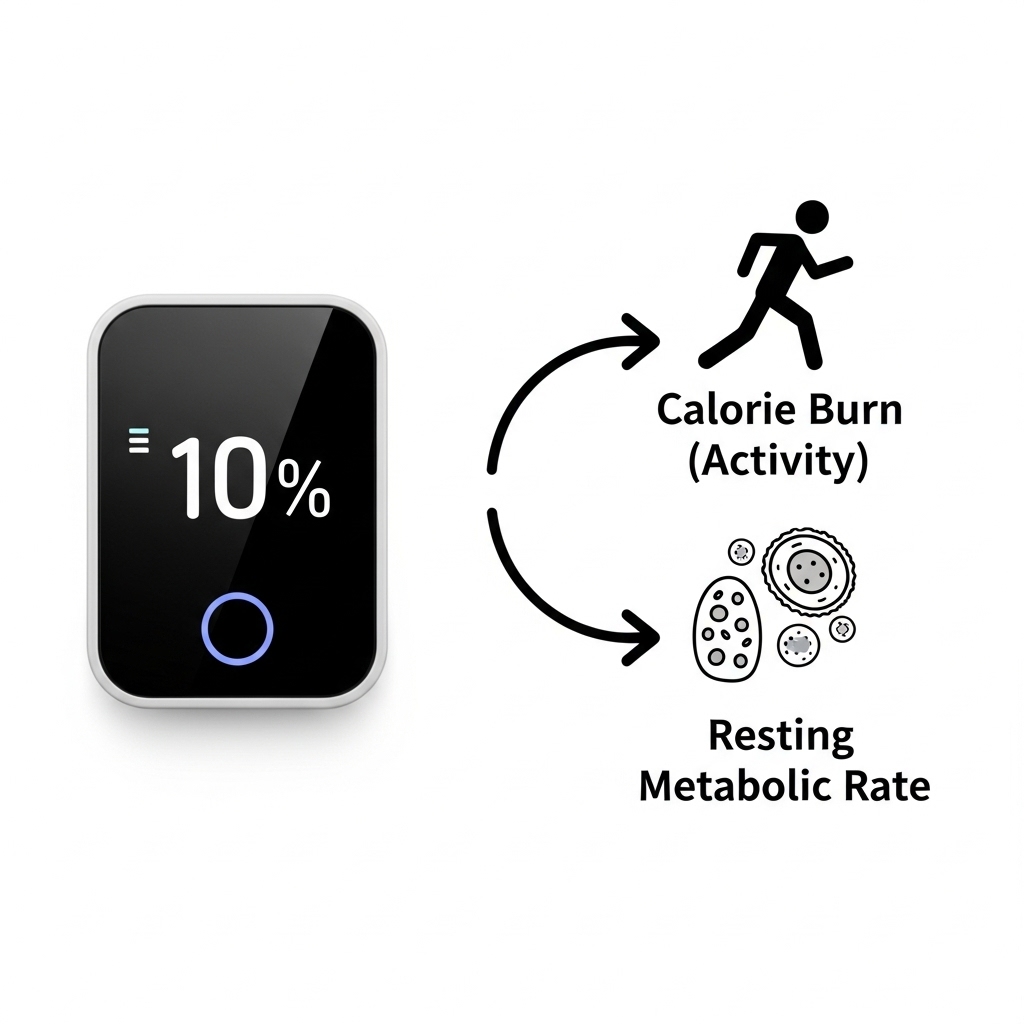
Eating less doesn’t mean the body burns more
This is where most people get stuck.
They assume:
Less food = more fat loss
But biologically, less food often means less energy output.
Your body responds to restriction by:
Slowing metabolic rate
Reducing spontaneous movement
Conserving fuel
Increasing fat storage efficiency
This isn’t sabotage.
It’s survival.
What actually happens when you eat less
| Action | What You Expect | What Often Happens |
|---|---|---|
| Eating fewer calories | Faster weight loss | Metabolism slows |
| Skipping meals | Better control | Hormone disruption |
| Cutting carbs/fats | Leaner body | Higher stress hormones |
| Extreme discipline | Long-term results | Weight regain |
The body adapts downward, not upward.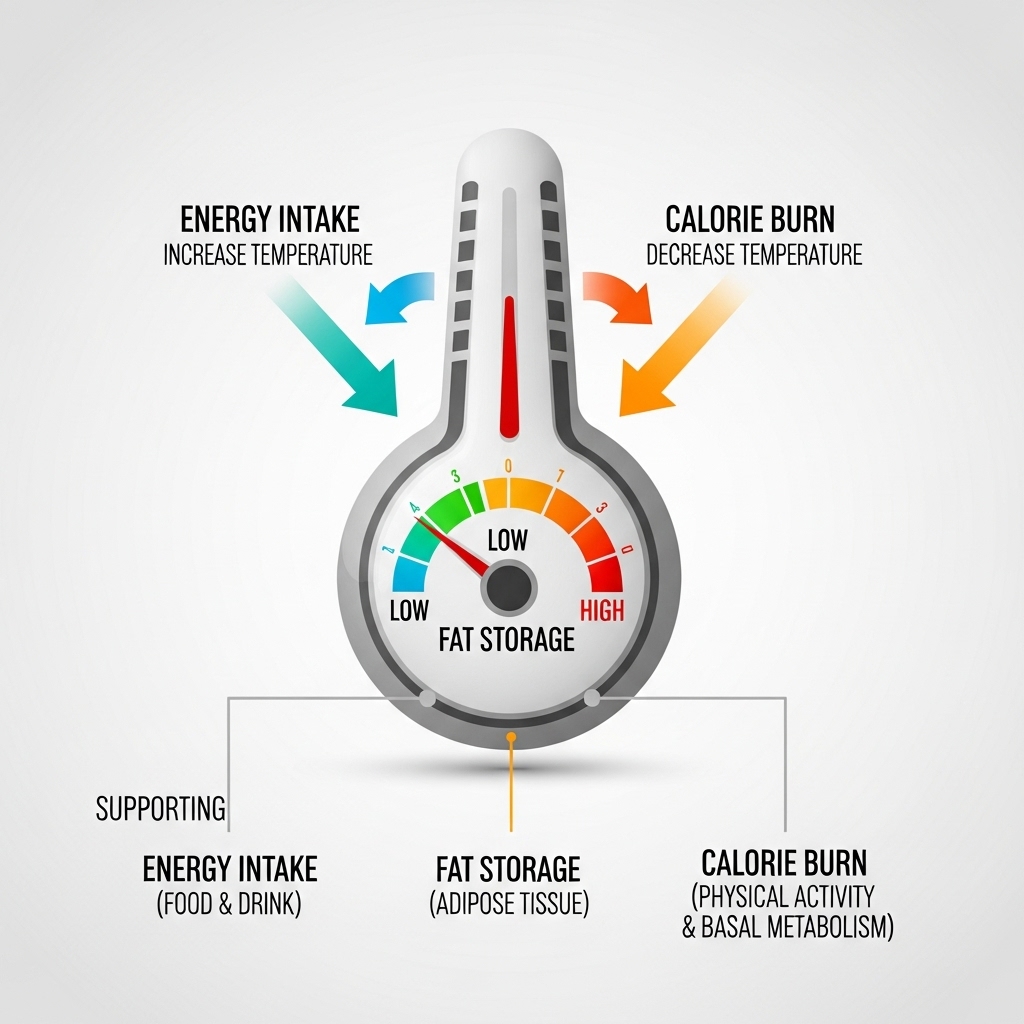
Metabolism isn’t broken — it’s responding
One of the most damaging ideas in diet culture is the phrase:
“My metabolism is broken.”
In reality, your metabolism is doing exactly what it’s designed to do.
When food intake drops:
Thyroid activity reduces
Resting energy expenditure lowers
The body becomes efficient on fewer calories
Think of metabolism like a dimmer switch, not an on/off button.
When you keep pushing intake lower, the body turns the lights down.
Why weight gain can happen during restriction
This is the part no one warns you about.
Weight gain during chronic undereating can come from:
Loss of muscle (lower calorie needs)
Elevated cortisol (fat storage hormone)
Insulin instability
Water retention from stress
Later rebound eating driven by hormones
You may not be overeating —
your body may be over-protecting.
Cortisol: the stress hormone that changes everything
Cortisol rises when the body perceives threat.
That threat can be:
Emotional stress
Poor sleep
Over-exercise
Undereating
High cortisol:
Encourages fat storage (especially abdominal)
Breaks down muscle
Increases cravings
Disrupts blood sugar
So yes — you can eat less and still gain weight if cortisol is driving the bus.
Table: Signs cortisol may be affecting your weight
| Symptom | What It Can Indicate |
|---|---|
| Belly weight gain | Stress-driven fat storage |
| Poor sleep | Hormonal disruption |
| Cravings at night | Blood sugar instability |
| Fatigue | Metabolic slowdown |
Hunger hormones don’t respond to willpower
Two hormones control appetite more than discipline ever will:
Ghrelin — hunger signal
Leptin — fullness & satisfaction
When calories stay low:
Ghrelin increases
Leptin sensitivity decreases
This leads to:
Constant food thoughts
Feeling “out of control”
Cycles of restriction and overeating
This isn’t weakness.
It’s chemistry.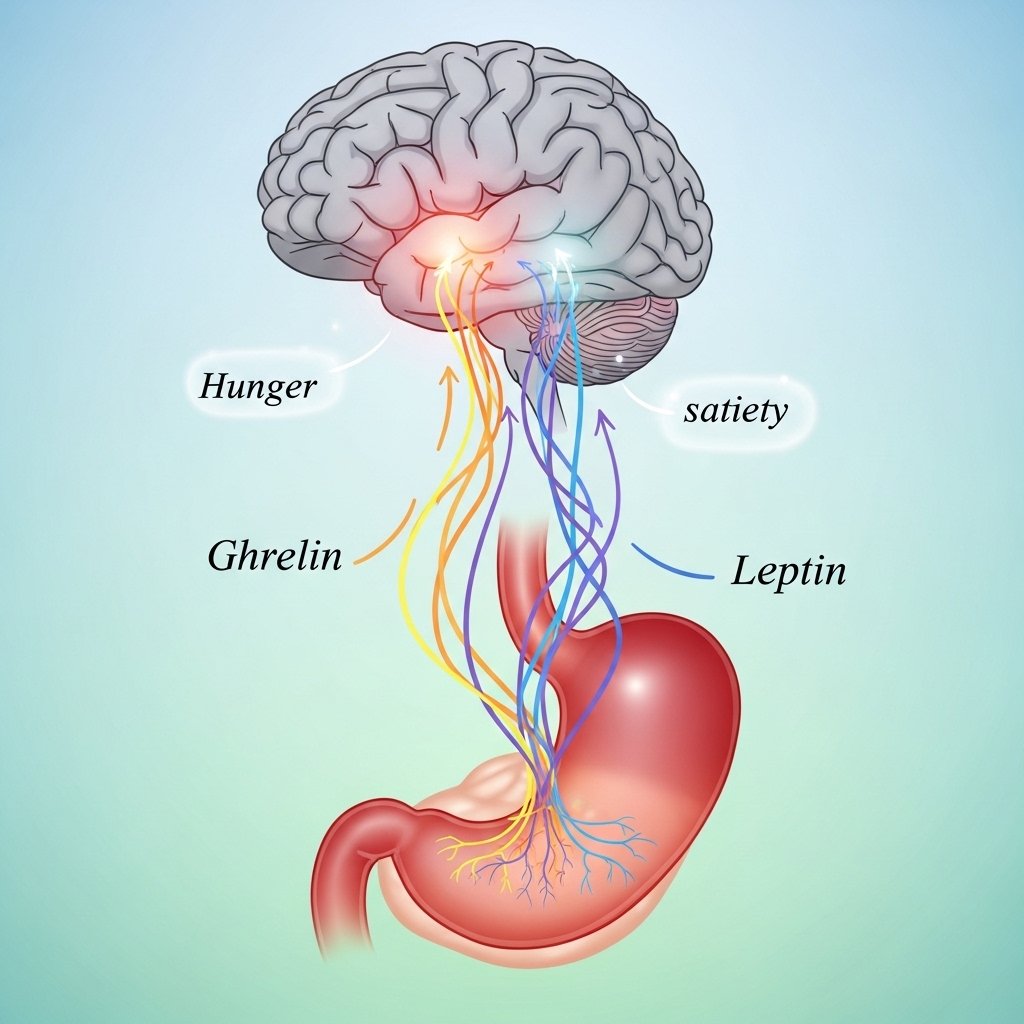
The muscle loss problem nobody talks about
When calories are too low, the body looks for fuel.
And muscle becomes an easy target.
Muscle:
Burns calories at rest
Supports insulin sensitivity
Shapes body composition
Less muscle = lower metabolism.
So even if weight drops initially, long-term gain becomes more likely.
Fat loss vs weight loss
| Weight Loss | Fat Loss |
|---|---|
| Scale drops | Body composition improves |
| Muscle may be lost | Muscle preserved |
| Metabolism slows | Metabolism supported |
| Regain likely | Results last |
Eating less often causes weight loss, not fat loss.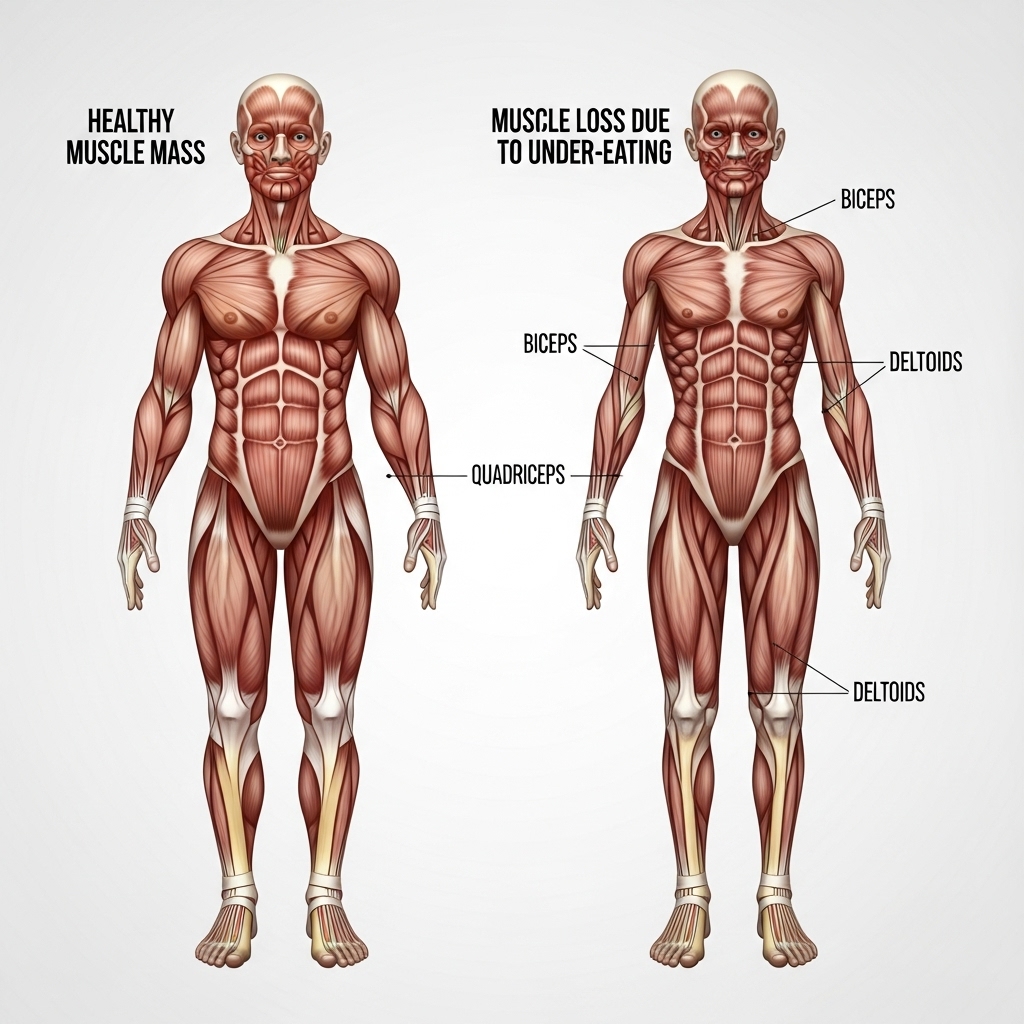
Sleep: the silent weight regulator
Poor sleep changes appetite hormones within days.
When sleep is short:
Hunger increases
Cravings intensify
Insulin sensitivity drops
You can eat less and still gain weight if sleep is compromised.
Sleep isn’t optional in weight regulation — it’s foundational.
Eating less vs eating enough
Here’s the real question most people avoid:
Am I eating enough to support my body?
Eating enough doesn’t mean overeating.
It means:
Regular meals
Adequate protein
Carbohydrates for energy
Fats for hormones
When the body feels fed, it relaxes.
And relaxed systems regulate weight better.
The emotional toll of chronic restriction
Restriction doesn’t just change biology.
It changes how you think:
Food anxiety
Guilt
Loss of hunger trust
All-or-nothing thinking
That mental load feeds physical stress.
And stress feeds weight gain.
A healthier reframe
Weight regulation works best when:
The body feels safe
Food is consistent
Stress is managed
Muscle is supported
Eating less isn’t always the answer.
Sometimes it’s the barrier.

If your body hasn’t responded to restriction the way you were promised, it hasn’t failed you.
It’s protecting you.
And once you understand that — truly understand it — the path forward stops being a battle and starts becoming a conversation.
The Hidden Role of Hormones, Stress, and Dieting History
When “doing everything right” still doesn’t work
Have you ever looked at your plate and thought, “Honestly… I can’t eat any less than this”?
And yet, the scale refuses to move. Or worse — it creeps upward.
This moment is deeply frustrating. It makes people doubt their discipline, their honesty, even their bodies. But here’s the truth most weight-loss advice skips:
Weight gain is not always a food problem. Often, it’s a hormonal and stress problem shaped by years of dieting.
Eating less may look logical, but biology doesn’t run on logic alone. It runs on signals — and those signals come from hormones, stress levels, sleep, and past experiences with food.
Let’s talk about what’s really happening beneath the surface.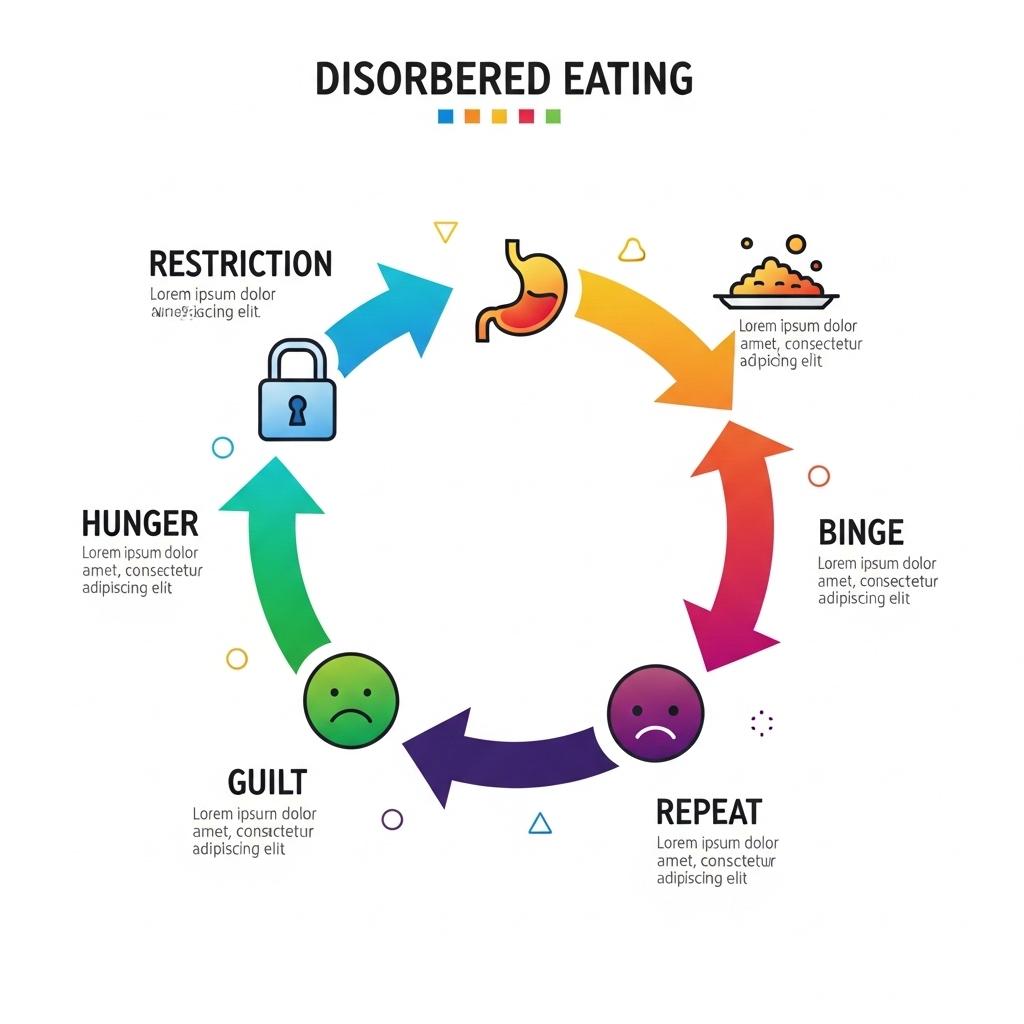
The body remembers every diet you’ve ever done
Your body has a memory. Not an emotional one — a biological one.
Every time you:
Skipped meals
Cut calories aggressively
Eliminated food groups
Ignored hunger signals
Your body took notes.
It learned one thing very clearly:
Food is not guaranteed. Prepare to survive.
That lesson doesn’t disappear just because you “start eating normally again.”
Dieting history and weight gain: the missing link
Many people who struggle with stubborn weight gain have something in common:
A long history of dieting.
This includes:
Yo-yo dieting
Crash diets
Long-term calorie restriction
Repeated “starting over”
Each cycle teaches the body to become:
More efficient at storing fat
Slower at burning calories
More sensitive to stress
This is not a personal failure.
It’s metabolic learning.
Metabolic adaptation: what it really means
What most people think it means
“My metabolism is broken.”
What it actually means
Your metabolism adapted to keep you alive.
When calorie intake drops for long periods, the body responds by:
Lowering resting metabolic rate
Reducing non-essential energy use
Conserving fuel aggressively
This is called metabolic adaptation, and it’s a protective response — not damage.
Metabolic response to chronic undereating
| Body System | Adaptation |
|---|---|
| Metabolism | Slows to conserve energy |
| Hormones | Shift toward fat storage |
| Hunger | Becomes stronger and less predictable |
| Energy | Drops to preserve fuel |
| Weight | Becomes resistant to loss |
Eating less does not always mean burning more fat.
Sometimes it means burning less energy overall.
Hormones: the real drivers of weight gain
Calories don’t control weight directly.
Hormones decide how calories are used.
Let’s break down the most important ones.
Insulin: not the villain you were taught to fear
Insulin’s job is simple:
Move glucose from the blood into cells
Help store energy for later use
Problems arise when eating patterns are chaotic:
Long periods of restriction
Followed by large meals
Combined with high stress
This can lead to exaggerated insulin responses — not because you eat too much, but because your body doesn’t trust consistency.
The solution is not cutting carbs further.
The solution is regular, balanced meals.
Cortisol: the stress hormone behind stubborn fat
Cortisol deserves more attention than calories.
Cortisol rises when:
You’re under emotional stress
You sleep poorly
You over-exercise
You under-eat
High cortisol:
Encourages fat storage
Breaks down muscle
Raises blood sugar
Increases cravings
This is why many people gain belly fat even while eating less.
Signs cortisol may be affecting your weight
| Sign | Possible Meaning |
|---|---|
| Belly weight gain | Stress-driven fat storage |
| Trouble sleeping | Hormonal imbalance |
| Constant fatigue | Metabolic suppression |
| Sugar cravings | Blood sugar instability |
You cannot out-diet cortisol.
Thyroid hormones and calorie restriction
The thyroid controls how quickly your body uses energy.
When calorie intake is too low for too long:
Thyroid output slows
Metabolism gently downshifts
Energy levels fall
This doesn’t mean your thyroid is damaged.
It means your body is conserving fuel — exactly as it was designed to do.
Leptin and ghrelin: why hunger gets louder, not quieter
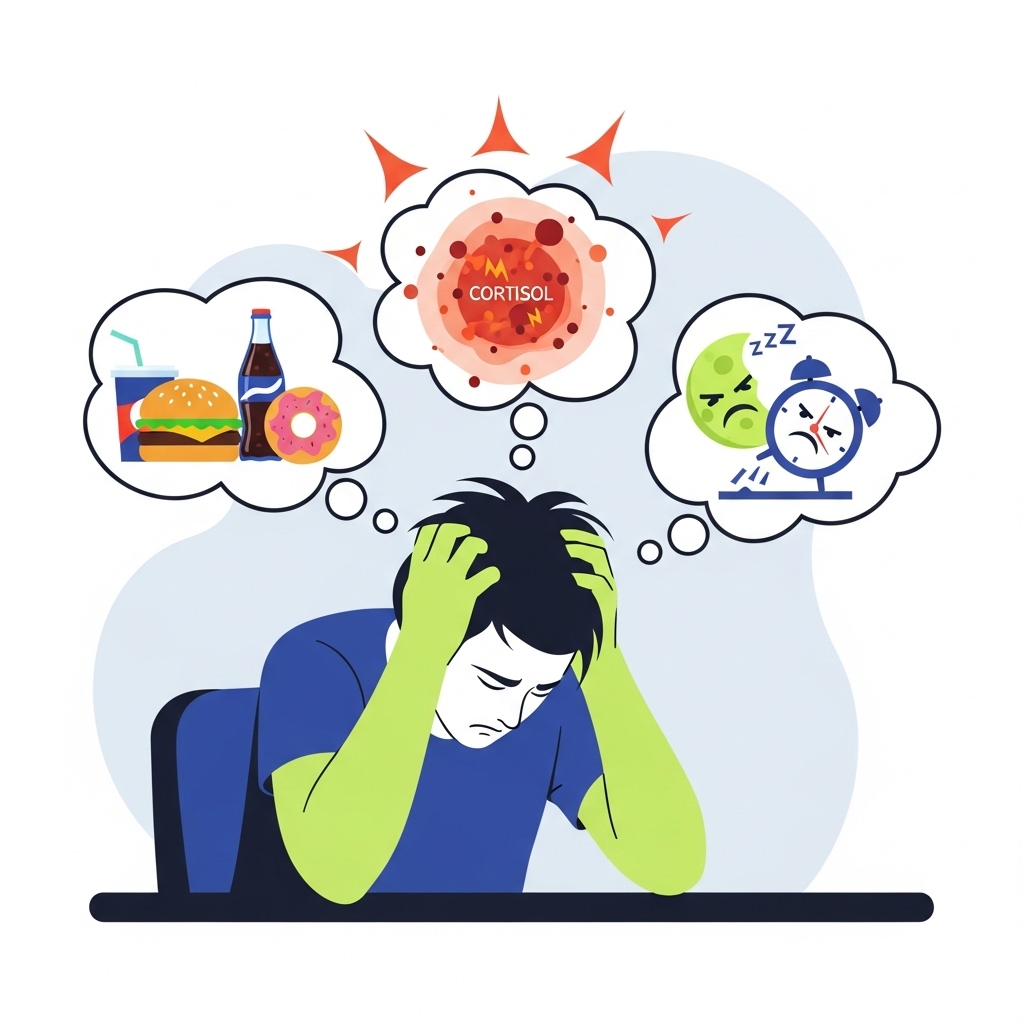
Two appetite hormones matter most:
Ghrelin (hunger hormone)
Increases when food intake is low
Becomes louder with restriction
Leptin (satiety hormone)
Signals fullness
Becomes less effective with chronic dieting
This is why eating less often leads to:
Obsessive food thoughts
Sudden loss of control
Cycles of restriction and overeating
This is biology — not a willpower problem.
Why willpower fails long-term
Willpower is a mental resource.
Hunger is a biological drive.
Biology always wins.
When weight loss relies on constant restraint:
Mental fatigue builds
Hunger hormones intensify
Binges feel sudden and confusing
A system that depends on willpower is not sustainable.
Stress + dieting: a dangerous combination
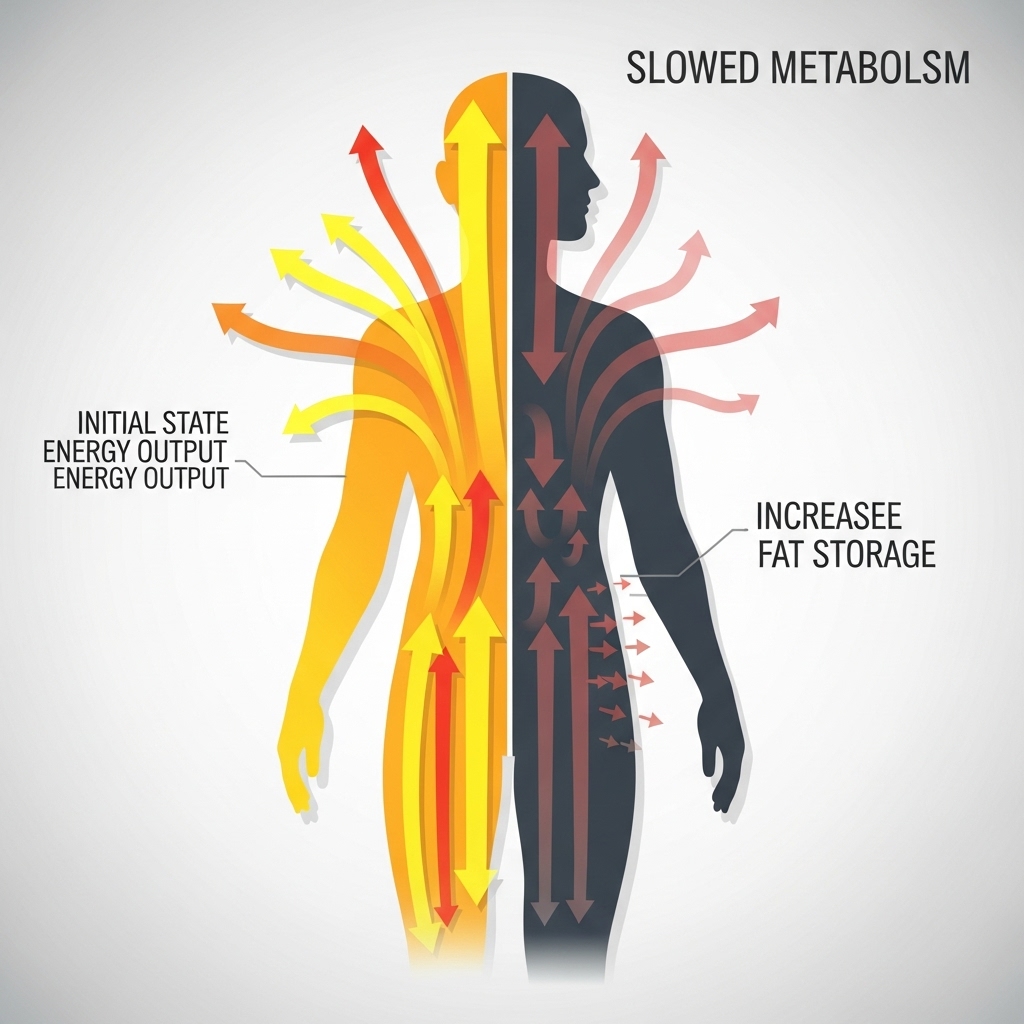
Dieting already stresses the body.
When combined with:
Work pressure
Poor sleep
Emotional strain
Overtraining
The body shifts fully into survival mode.
In survival mode:
Fat loss slows
Muscle breakdown increases
Weight becomes resistant
Eating less in this state often backfires.
Muscle loss: the silent contributor to weight gain
When calories and protein are too low, the body looks for fuel.
Muscle is expensive tissue.
So the body uses it.
Less muscle means:
Lower metabolic rate
Worse insulin sensitivity
Easier fat gain later
This is why many people regain weight quickly after dieting — often more fat than before.
Why weight returns after dieting
Diet phase
Calories low
Weight drops
Muscle loss occurs
Post-diet phase
Normal eating resumes
Metabolism remains suppressed
Fat regain happens quickly
This is not lack of control.
It’s predictable physiology.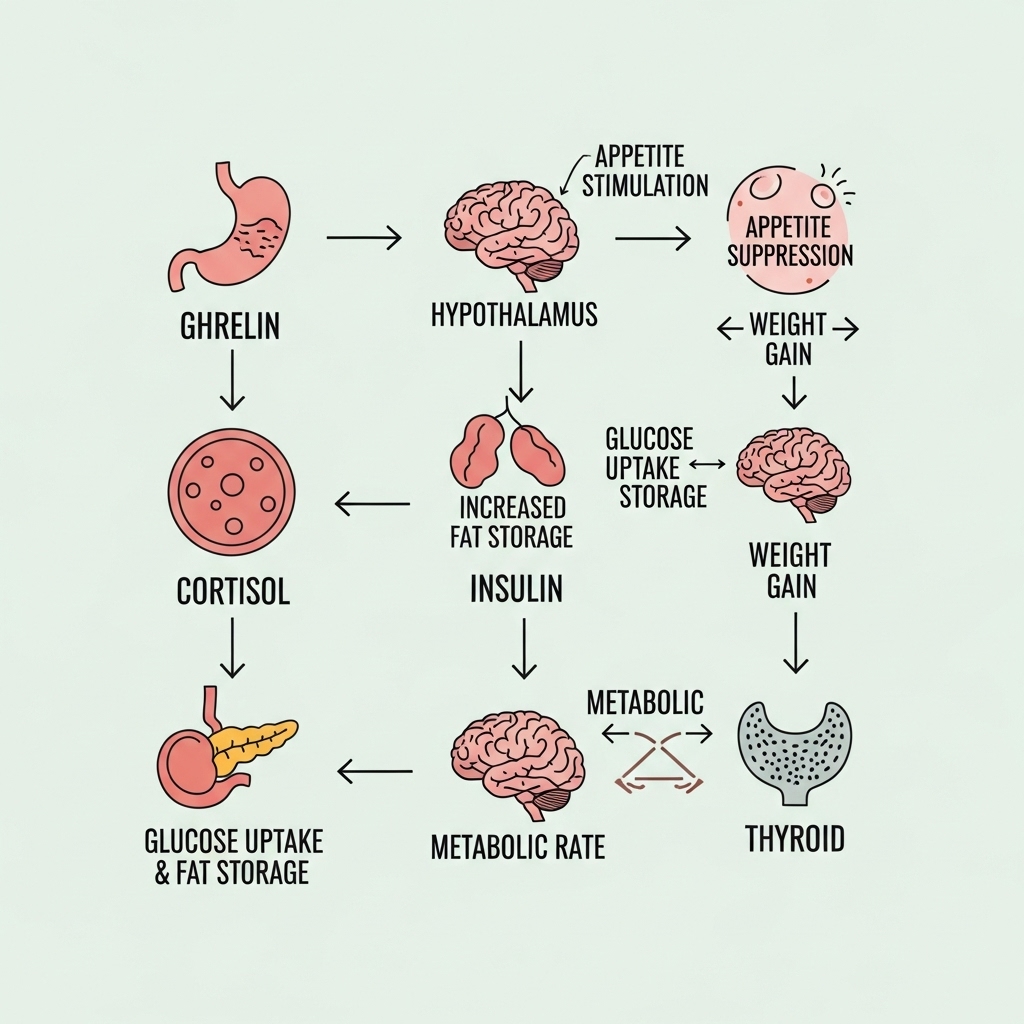
Why eating less stops working over time
At first, eating less may reduce weight.
Over time:
Metabolism adapts
Hormones resist
Stress increases
Results stall
When progress stops, people often respond by:
Eating even less
Exercising more
This deepens the problem.
The shift that actually helps
Instead of asking:
“How can I eat less?”
A better question is:
“How can I support my body so it feels safe enough to let go of weight?”
Safety signals include:
Regular meals
Adequate protein
Enough carbohydrates
Restful sleep
Manageable stress
Weight regulation improves when safety improves.
Reframing weight gain with compassion
Weight gain is not always excess.
Sometimes it’s protection.
When the body has learned scarcity, it clings to energy.
Understanding this removes shame — and shame is essential to release if healing is going to happen.

If eating less hasn’t worked for you, it doesn’t mean you failed.
It means the strategy no longer matches your biology.
Your body is not resisting you.
It’s responding to the story it’s been told — a story of stress, restriction, and unpredictability.
Change the signals, and the response changes too.
Practical Systems, Recovery, and Long-Term Weight Regulation

Introduction: From confusion to clarity
Many people have tried every trick in the book:
Skipping breakfast
Cutting carbs at dinner
Starving all day and “rewarding” themselves at night
And yet, the results are frustrating:
Weight stubbornly remains
Energy levels drop
Cravings intensify
This is where theory meets practice.
This is about systems you can use today — routines, habits, and strategies to work with your biology instead of against it.
Rebuilding trust with food
Your body has been through decades of dieting?
It may have learned that food is scarce.
Rebuilding trust means showing your body:
“Food is coming, and it’s reliable.”
How to rebuild trust
Eat consistently
3–5 balanced meals per day
Don’t skip meals to “save calories”
Include all macronutrients
Protein: muscle support
Carbs: brain and energy fuel
Fats: hormonal support
Avoid extremes
No ultra-low calories
No elimination diets unless medically necessary
Sample balanced daily intake
| Meal | Protein | Carbs | Fat | Notes |
|---|---|---|---|---|
| Breakfast | 25g | 40g | 12g | Oats with milk and nuts |
| Snack | 10g | 20g | 5g | Greek yogurt + fruit |
| Lunch | 30g | 50g | 15g | Chicken, rice, veggies |
| Snack | 10g | 15g | 5g | Protein smoothie |
| Dinner | 25g | 35g | 12g | Fish, sweet potato, greens |
This structure supports metabolism while preventing hunger-driven overeating.
Stress management
High cortisol prevents weight loss, even with perfect nutrition.
Daily stress-reduction tools
Breathing exercises: 5–10 min/day
Meditation or mindfulness: 10–15 min/day
Gentle movement: yoga, walking, stretching
Digital detox: reduce screen time before bed
Stress reduction is not optional — it’s a core weight-regulation strategy.
Sleep optimization
Sleep affects appetite, hormones, and metabolism.
Guidelines for better sleep
7–9 hours per night
Consistent sleep/wake times
Dark, cool, quiet room
Limit caffeine and electronics 2–3 hours before bed
How sleep affects weight
Poor sleep → ↑ ghrelin, ↓ leptin → ↑ hunger → weight gain
Adequate sleep → hormonal balance → stable appetite → easier fat regulation
Strength training over cardio punishment

Many people believe cardio burns fat effectively.
But excessive cardio + under-eating often backfires.
Why strength training works better
Preserves and builds muscle → higher resting metabolism
Improves insulin sensitivity
Supports long-term weight regulation
Sample weekly strength plan
| Day | Activity | Duration | Focus |
|---|---|---|---|
| Mon | Full-body resistance | 45 min | Strength |
| Tue | Light cardio | 20 min | Recovery |
| Wed | Lower body | 45 min | Muscle building |
| Thu | Mobility & stretching | 30 min | Recovery |
| Fri | Upper body | 45 min | Muscle building |
| Sat | Light activity | 30 min | Walk/hike |
| Sun | Rest | — | Recovery |
Consistency > intensity
Hydration and nutrient timing
Water and timing of meals influence metabolism:
Drink 2–3 liters/day
Include protein early in the day
Carbs around workouts to fuel energy
Fats distributed to support hormones
Small adjustments here prevent metabolic slowdowns.
Mindful eating
Mindfulness reduces overeating triggered by stress, boredom, or habit.
Practical strategies
Eat without distractions
Chew slowly
Ask, “Am I truly hungry?” before snacking
Keep a short food journal to track patterns (not calories)
Tracking non-scale metrics

Weight on a scale fluctuates for many reasons: water, glycogen, hormones.
Focus instead on:
Energy levels
Strength and performance in workouts
Clothes fitting differently
Mood and mental clarity
This builds confidence and prevents frustration.
Non-scale progress metrics
| Metric | How to track | Why it matters |
|---|---|---|
| Energy | Daily journal | Indicates metabolic recovery |
| Strength | Workout log | Muscle preservation |
| Body composition | Tape measure | Fat vs. muscle changes |
| Sleep quality | Sleep app | Supports hormone balance |
Gradual nutrition recalibration
For those who have chronically undereaten:
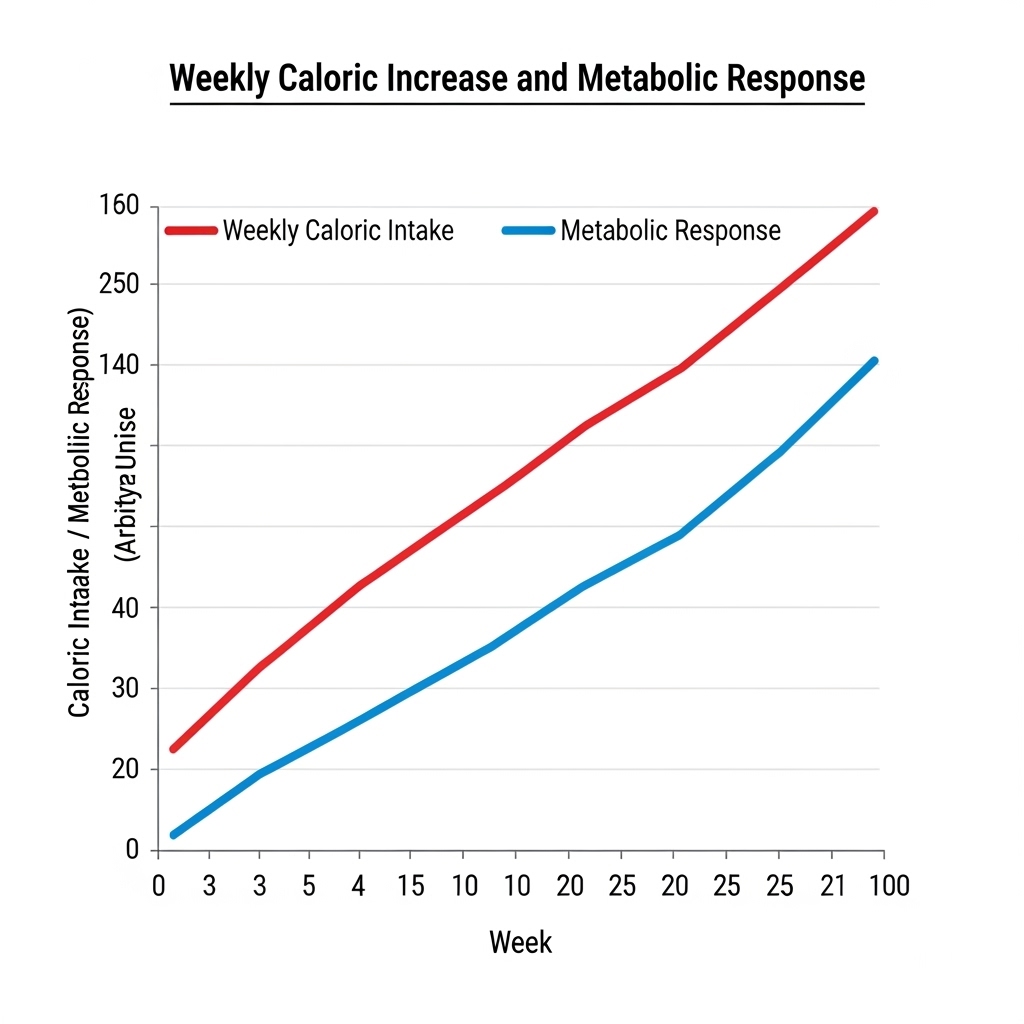
Increase calories slowly (100–200 kcal/week)
Add protein and healthy fats first
Observe energy, sleep, and weight responses
Adjust until the body feels “safe”
Think of this as metabolic repair, not “dieting.”
Gradual intake increase and metabolic response
Week 1: +100 kcal/day → slight energy improvement
Week 2: +200 kcal/day → hunger stabilizes
Week 3: +300 kcal/day → resting metabolism normalizes
Week 4–6: +400 kcal/day → fat storage stabilizes
Long-term behavior integration
Daily routines and habits determine long-term success.
Eat consistently
Strength train 3–4x/week
Prioritize sleep and stress management
Track energy and mood instead of obsessing over the scale
Consistency compounds over time — slow, steady progress wins over quick fixes.
Understanding plateaus
Even with optimal routines, plateaus occur:
Hormonal adjustments
Water retention
Stress or sleep issues
Lifestyle inconsistencies
Instead of panicking:
Review routines
Adjust stress and sleep
Add strength or gentle cardio
Avoid further caloric restriction
Plateau troubleshooting
| Plateau Cause | Practical Fix |
|---|---|
| Hormonal shift | Improve sleep, manage stress |
| Muscle loss | Prioritize resistance training |
| Over-restriction | Increase caloric intake gradually |
| Life stress | Adjust workload, incorporate relaxation |
Real-life example: Busy professional
Scenario: 35-year-old office worker, low activity, stressed, chronically dieting.
Strategy applied:
Regular protein-focused meals
30–45 min strength training 3x/week
Mindful snack management
7–8 hours sleep per night
Stress management (meditation, walks)
Outcome after 12 weeks:
Energy levels improved
Clothes fit better
Weight stable, fat percentage decreased
Mental clarity returned

The body isn’t resisting you.
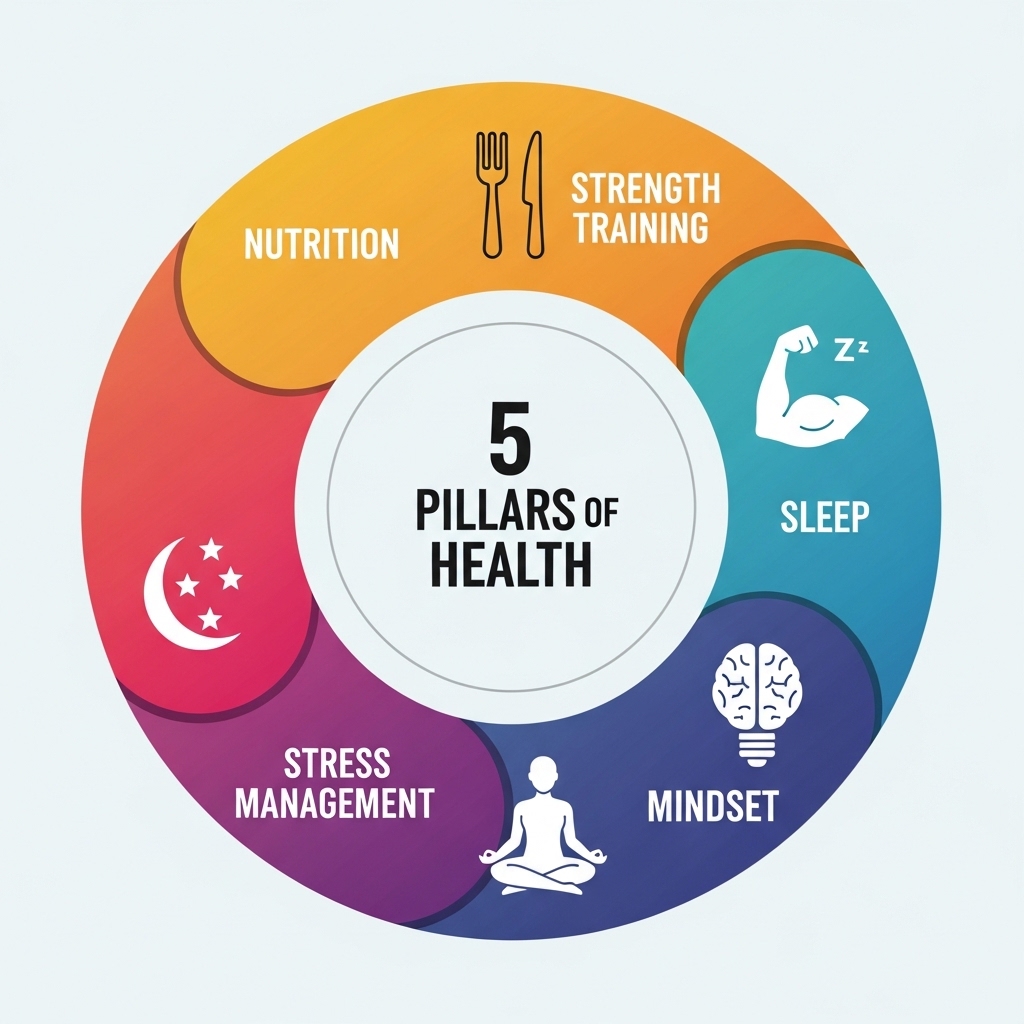
It’s responding to signals — nutrition, stress, sleep, and exercise.
Eating less isn’t always the answer.
Supporting your body, building trust, and creating consistent routines are.
When these systems align, weight regulation happens without battles or extremes
Advanced Recovery, Metabolism Boosting, and Sustainable Habits
Introduction: Moving from survival to thriving
By now, you understand why chronic restriction and dieting cycles can backfire: slowed metabolism, hormone disruption, and stress-driven fat retention.
Part 4 is about taking proactive steps to rebuild your body and mind, restoring natural weight regulation, and creating habits that last without obsessing over calories or scales.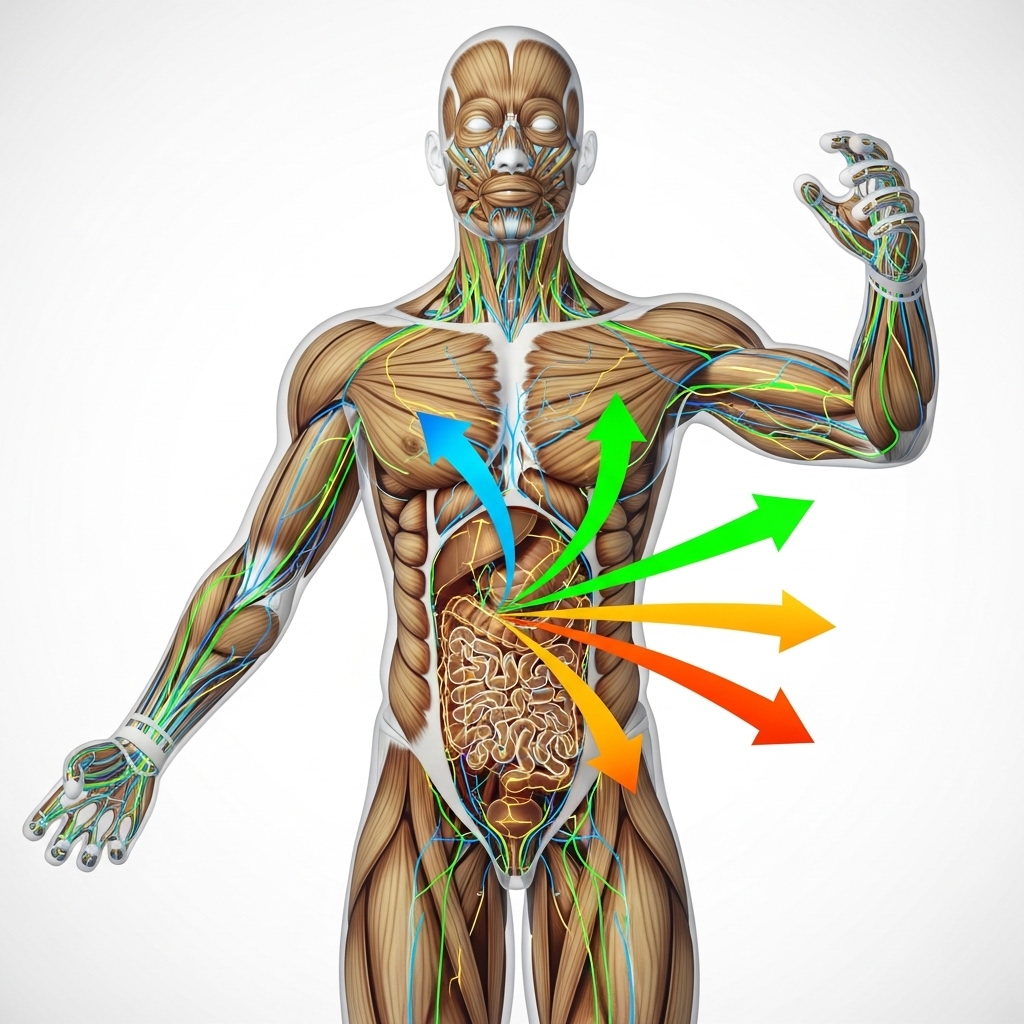
The concept of metabolic recovery
Metabolic recovery is the process of restoring your body’s ability to burn energy efficiently after periods of chronic undereating.
Key elements of metabolic recovery:
Caloric reintroduction – slowly increasing intake to meet energy needs
Macronutrient balance – adequate protein, carbs, and fats
Muscle preservation – strength training to maintain and grow lean mass
Hormone normalization – supporting thyroid, leptin, insulin, and cortisol balance
Lifestyle alignment – sleep, stress management, and consistent routines
Think of it as repairing a car engine: you can’t just pump more fuel in without first ensuring the pistons, oil, and timing are all working properly.

Step-by-step caloric reintroduction
If your body has been in restriction mode, jumping to full caloric intake can cause fat gain and bloating. Instead, follow gradual progression.
Example caloric reintroduction schedule
| Week | Daily Intake Increase | Goal | Notes |
|---|---|---|---|
| 1 | +100 kcal | Stabilize energy | Observe hunger & mood |
| 2 | +200 kcal | Reduce cravings | Add protein-rich snack |
| 3 | +300 kcal | Increase metabolic rate | Include complex carbs |
| 4 | +400 kcal | Support hormones | Add healthy fats |
| 5–6 | Maintain | Optimize energy & metabolism | Adjust based on feel |
Key point: Track energy, mood, and sleep, not just scale weight. They reflect recovery better than numbers.
Macronutrient strategies
Protein – the metabolism anchor
Supports muscle preservation
Reduces hunger
Enhances thermic effect (burns more calories during digestion)
Target: 1.2–1.6g per kg body weight per day
Carbohydrates – fuel for energy and hormone function
Brain fuel
Supports thyroid and leptin signaling
Prevents metabolic slowdown
Tip: Include whole-food carbs like oats, sweet potatoes, fruits, and legumes.
Fats – hormonal balance
Supports testosterone, estrogen, and cortisol regulation
Absorbs fat-soluble vitamins
Provides long-lasting satiety
Sources: Avocado, nuts, seeds, olive oil, fatty fish
Strength training for metabolic repair
Strength training rebuilds lean muscle, which boosts resting metabolism and enhances fat utilization.
Example weekly plan:
| Day | Exercise | Focus |
|---|---|---|
| Mon | Squats, lunges, deadlifts | Lower body |
| Tue | Pull-ups, rows, push-ups | Upper body |
| Wed | Mobility & stretching | Recovery |
| Thu | Bench press, shoulder press, triceps | Upper body |
| Fri | Deadlift, leg press, hamstring curl | Lower body |
| Sat | Light cardio / walking | Recovery |
| Sun | Rest | Full recovery |
Note: Use progressive overload – gradually increase weights or reps to keep metabolic demand high.
Sleep – the ultimate recovery tool
Sleep is often overlooked but is essential for:
Hormone regulation (cortisol, leptin, ghrelin)
Muscle recovery
Blood sugar stability
Energy and mental clarity
Tips for optimizing sleep:
Aim for 7–9 hours nightly
Keep a consistent sleep/wake schedule
Limit caffeine 6–8 hours before bed
Create a dark, cool, and quiet environment
Consider mindfulness or deep breathing before sleep
Stress reduction for sustainable weight regulation
Chronic stress disrupts metabolism and makes fat retention more likely.
Practical strategies:
Mindfulness meditation: 10–15 minutes/day
Breathing exercises: 5 minutes, morning and evening
Gentle movement: yoga, walking, stretching
Time management: reduce overcommitment
Digital detox: minimize late-night screen exposure
Reducing stress tells your body: “It’s safe to let go of excess fat.”
Mindful eating and portion awareness
Mindful eating helps break cycles of restriction and bingeing.
Techniques:
Eat without distractions
Pause between bites
Ask, “Am I truly hungry?”
Use smaller plates to naturally regulate portions
Focus on satiety signals rather than calorie counting
Tracking progress beyond the scale
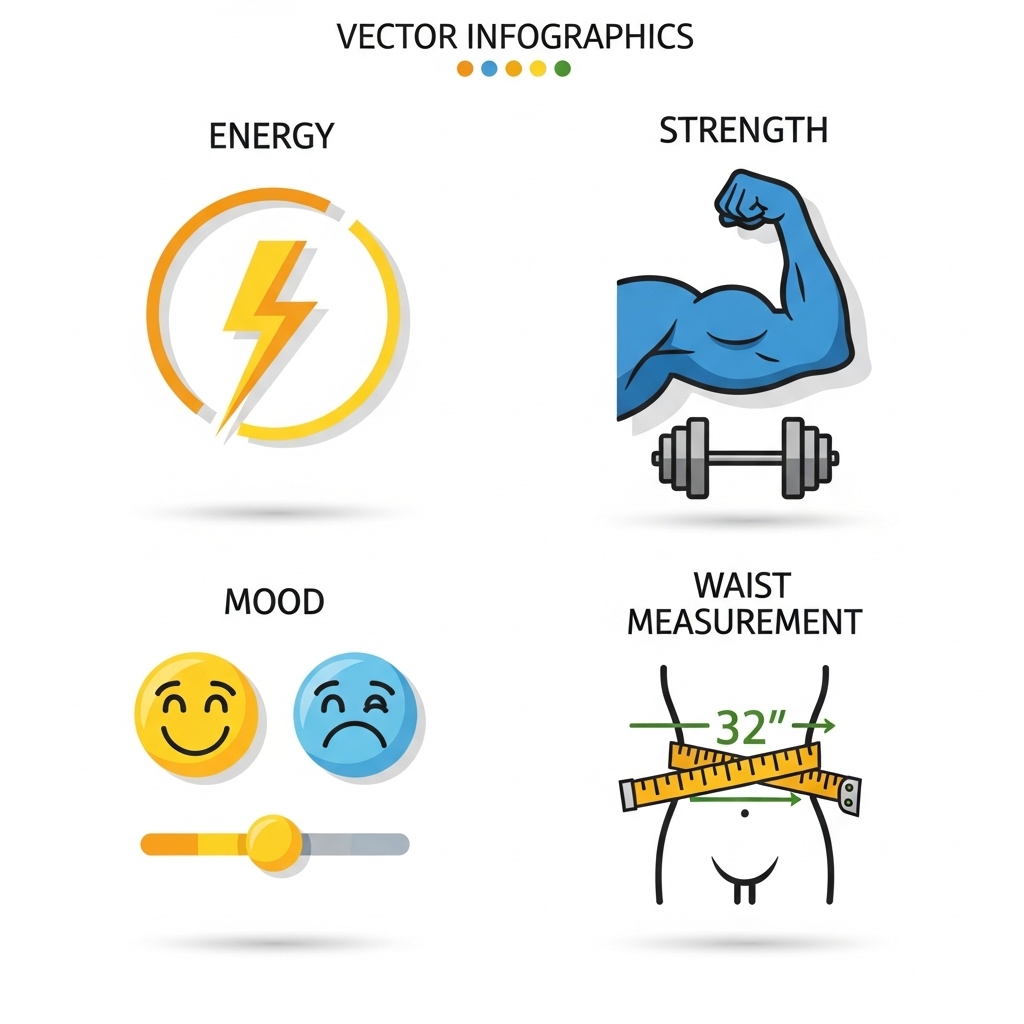
The scale fluctuates daily. To measure recovery and fat loss, track non-scale metrics:
| Metric | How to Measure | Why it Matters |
|---|---|---|
| Energy | Journal or app | Reflects metabolic repair |
| Strength | Track weights/reps | Indicates muscle retention/gain |
| Mood | Daily rating | Hormonal balance indicator |
| Waist circumference | Tape measure | Fat distribution vs water retention |
Meal timing and frequency
Regular eating helps stabilize hormones and prevent overeating.
3–5 meals/day
Include protein in each meal
Time carbs around activity for energy
Avoid long fasting if metabolism is slow
Consistency signals safety to the body, allowing it to release stored fat.
Hydration and micronutrients
Proper hydration is often overlooked:
2–3 liters of water per day
Electrolyte balance supports metabolism
Micronutrients (magnesium, zinc, vitamin D) assist hormone function
Advanced recovery strategies
Refeed days: Occasional higher-carb days to support leptin and thyroid
Active recovery: Swimming, yoga, light cycling
Periodized strength: Alternate heavier and lighter weeks to prevent overtraining
Metabolic flexibility: Alternate fuel sources (carbs vs fats) to improve energy utilization
Overcoming plateaus
Even with optimal nutrition and activity, plateaus occur.
Common causes:
| Cause | Solution |
|---|---|
| Hormonal adaptation | Adjust sleep, stress, strength training |
| Muscle loss | Prioritize protein and resistance training |
| Energy deficit | Gradually increase calories |
| Lifestyle stress | Implement relaxation techniques |
Plateaus are signals, not failures.
Integrating sustainable habits
Long-term weight regulation depends on habits, not extremes.
Consistent meals
Strength training
Sleep prioritization
Stress management
Mindful eating
Small, repeatable actions create compound benefits over months and years.
Sample weekly routine
| Day | Meal Pattern | Exercise | Recovery |
|---|---|---|---|
| Mon | 3 meals + 1 snack | Strength training | 10 min meditation |
| Tue | 3 meals | Light cardio/walk | Stretching |
| Wed | 3 meals + snack | Strength | Sleep hygiene focus |
| Thu | 3 meals | Mobility & yoga | Relaxation breathing |
| Fri | 3 meals + snack | Strength | Social connection / fun |
| Sat | 3 meals | Active leisure | Sleep optimization |
| Sun | 3 meals | Rest | Mindfulness reflection |
Routine simplicity drives compliance and long-term success.
Real-life example – metabolic reset
Profile: 40-year-old teacher, chronic dieting history, 5’5”, 150 lbs, low activity, stressed.
Intervention applied:
Gradual calorie increase (+200 kcal/week)
Strength 3x/week
Mindfulness and 10–15 min meditation
Sleep optimized (7–8h)
Consistent protein intake and balanced meals
Results after 12 weeks:
Energy increased
Clothes fit better
Fat mass reduced, muscle mass preserved
Scale slightly increased (due to muscle gain)
Outcome: Metabolism restored, weight regulation stabilized, body composition improved.

Eating less is not always the answer.
Advanced recovery, thoughtful nutrition, stress management, and sustainable habits allow the body to regulate weight naturally.
The focus shifts from restriction to empowerment, repair, and consistency.
Your body is capable of balance — once it feels safe.
Complete Guide: Sustainable Weight Regulation, Recovery
Introduction: Why conventional dieting often fails
Have you ever wondered why, despite eating less, your weight refuses to budge—or even climbs?
You’re not alone. This common frustration isn’t about willpower, discipline, or “laziness.” It’s about how your body responds to stress, restriction, and hormonal imbalance.
This final part of our comprehensive guide dives into practical, sustainable strategies to support metabolism, restore hormonal balance, repair your relationship with food, and achieve long-term weight regulation—without obsessive calorie counting or extreme diets.
We’ll also cover FAQs that answer real questions people have when their efforts to “eat less” don’t work.
Key principles for sustainable weight management
Before we jump into routines and strategies, let’s outline the fundamental principles your body needs:
Metabolic Support – Your metabolism adapts to scarcity; feeding it properly restores energy balance.
Hormonal Balance – Cortisol, leptin, ghrelin, insulin, and thyroid hormones drive weight, appetite, and fat storage.
Muscle Preservation – Lean muscle is metabolically active and critical for long-term fat regulation.
Sleep and Recovery – Without adequate rest, hunger signals spike, and fat storage increases.
Consistent Lifestyle Habits – Sustainable eating, movement, and stress management outperform short-term extremes.
Remember: Your body isn’t broken. It’s responding intelligently to the signals you give it.
Rebuilding metabolism with structured nutrition
Why eating more strategically helps
Chronic undereating slows metabolism, reduces thyroid output, and makes fat loss more difficult.
Gradual, structured increases in calories can restore metabolic rate without causing unnecessary fat gain.
Step-by-step caloric restoration
| Week | Daily Increase | Goal | Notes |
|---|---|---|---|
| 1 | +100 kcal | Stabilize energy | Observe appetite and fatigue |
| 2 | +150 kcal | Improve performance | Add protein-focused snack |
| 3 | +200 kcal | Normalize hunger hormones | Include complex carbs at meals |
| 4 | +250 kcal | Support thyroid & leptin | Add healthy fats |
| 5–6 | Maintain | Solidify metabolic recovery | Adjust based on energy & mood |
Pro tip: Track energy levels and hunger instead of obsessing over the scale. Your metabolism is a long-term system, not a daily calculator.
Macro-focused eating strategy
Balanced macronutrients are essential for weight regulation and metabolic health:
Protein – muscle and metabolism
Supports lean muscle retention
Boosts satiety
Thermic effect: burns more calories during digestion
Recommended: 1.2–1.6 g/kg body weight daily
Carbohydrates – energy and hormone function
Fuel for workouts and daily energy
Supports thyroid function and leptin signaling
Choose complex sources: oats, quinoa, sweet potatoes, legumes
Fats – hormonal regulation
Essential for cortisol, estrogen, testosterone balance
Helps absorb fat-soluble vitamins
Healthy sources: avocado, nuts, seeds, olive oil, fatty fish
When macros are balanced, your body feels “safe” and fat regulation improves naturally.
Strength training — your metabolism’s ally
Strength training is the most effective way to preserve muscle, boost metabolism, and support hormonal health.
Weekly sample plan
| Day | Focus | Exercises |
|---|---|---|
| Mon | Lower Body | Squats, lunges, deadlifts |
| Tue | Upper Body | Pull-ups, rows, push-ups |
| Wed | Mobility | Yoga, stretching, foam rolling |
| Thu | Full Body | Bench press, overhead press, kettlebell swings |
| Fri | Lower Body | Leg press, hamstring curls, calf raises |
| Sat | Active Recovery | Walk, swim, light cycling |
| Sun | Rest | Mental relaxation & sleep focus |
Progressive overload ensures continuous metabolic engagement and lean muscle growth.
Sleep — the ultimate fat-regulating tool
Sleep is non-negotiable for weight management:
7–9 hours per night
Supports leptin and ghrelin balance
Reduces cortisol and stress-related fat storage
Enhances insulin sensitivity
Tips for better sleep:
Maintain a consistent sleep/wake schedule
Limit caffeine 6–8 hours before bedtime
Keep your bedroom dark, cool, and quiet
Incorporate evening relaxation rituals
Sleep is a silent weight-loss ally. Neglect it, and no diet will work as effectively.
Stress management — controlling cortisol
Chronic stress directly impacts fat storage, especially around the abdomen.
Daily strategies:
Meditation: 10–15 minutes
Deep breathing or diaphragmatic exercises: 5 minutes
Gentle walks or yoga
Digital detox before bed
Journaling to process emotions
Stress reduction signals to your body: “It’s safe to let go of extra fat.”
Mindful eating and portion awareness
Mindfulness prevents the restriction-binge cycle:
Eat without distractions (phones, TV, computers)
Chew slowly and savor each bite
Ask: “Am I truly hungry?” before snacking
Use smaller plates for natural portion control
Tip: Focus on satiety and satisfaction, not calorie counting.
Tracking progress beyond the scale
Weight fluctuations are normal and often misleading. Focus on:
| Metric | Measurement | Why it matters |
|---|---|---|
| Energy | Journal or app | Reflects metabolic recovery |
| Strength | Track weights/reps | Indicates muscle preservation |
| Mood | Daily rating | Hormonal balance indicator |
| Waist Circumference | Tape measure | Fat distribution vs water retention |
Non-scale metrics provide a more accurate picture of progress.
Overcoming plateaus
Even with optimal habits, plateaus happen.
How to break them:
Adjust strength training intensity
Review sleep and stress management
Increase calories slightly if under-fueled
Avoid further restriction, which worsens metabolism
Tip: Plateaus are a natural part of body adaptation, not failure.
Sample daily routine for metabolic restoration
| Time | Activity | Notes |
|---|---|---|
| 7:00 AM | Breakfast | Protein + complex carbs + healthy fats |
| 10:00 AM | Snack | Greek yogurt + fruit |
| 12:30 PM | Lunch | Balanced macro meal |
| 3:00 PM | Strength or light cardio | Build muscle & movement |
| 5:00 PM | Snack | Nuts + fruit, protein-based |
| 7:00 PM | Dinner | Protein + veggies + complex carbs |
| 9:00 PM | Wind-down | Stretching, meditation, screen-off |
| 10:30 PM | Sleep | 7–9 hours |
Routine consistency communicates safety to your body.
FAQs —
Q1: Can eating more calories actually help me lose weight?
Yes, when your metabolism has slowed from chronic restriction. Gradually increasing calories restores energy balance and fat-burning capacity.
Q2: How long does metabolic repair take?
Typically 4–12 weeks with consistent nutrition, sleep, and strength training.
Q3: Do I need supplements?
Whole foods first. Supplements like vitamin D, magnesium, and omega-3s can support hormone function and metabolism.
Q4: Will I gain fat if I stop restricting calories?
Short-term weight changes may occur due to water and glycogen restoration. Long-term fat gain is less likely with balanced habits.
Q5: How can I track progress without obsessing over the scale?
Monitor energy, strength, mood, waist circumference, and body composition rather than daily scale readings.
Charts & Tables Summary (for Elementor)
1. Hormone Balance & Lifestyle Alignment
| Hormone | Lifestyle Strategy | Effect |
|---|---|---|
| Cortisol | Stress reduction, sleep | Reduced belly fat, stable energy |
| Insulin | Balanced meals, strength training | Stable blood sugar, reduced cravings |
| Leptin | Consistent meals, adequate carbs | Satiety signals restored |
| Ghrelin | Gradual intake, protein | Hunger normalized |
| Thyroid | Adequate calories & nutrients | Metabolic rate optimized |
2. Non-Scale Progress Metrics
| Metric | Measurement | Frequency |
|---|---|---|
| Energy | Journal | Daily |
| Strength | Log weights/reps | Per session |
| Mood | Rating scale | Daily |
| Waist Circumference | Tape | Weekly |
Conclusion:

Eating less is not always the answer to weight gain. Your body is intelligent and adaptive—it reacts to:
Consistent nourishment
Muscle-preserving activity
Adequate sleep
Stress management
Patience and mindful habits
By creating systems that communicate safety and balance, weight regulation happens naturally—without guilt, extremes, or obsession.
The journey is not about restriction. It’s about supporting your biology, reclaiming energy, and achieving lasting, sustainable results.
